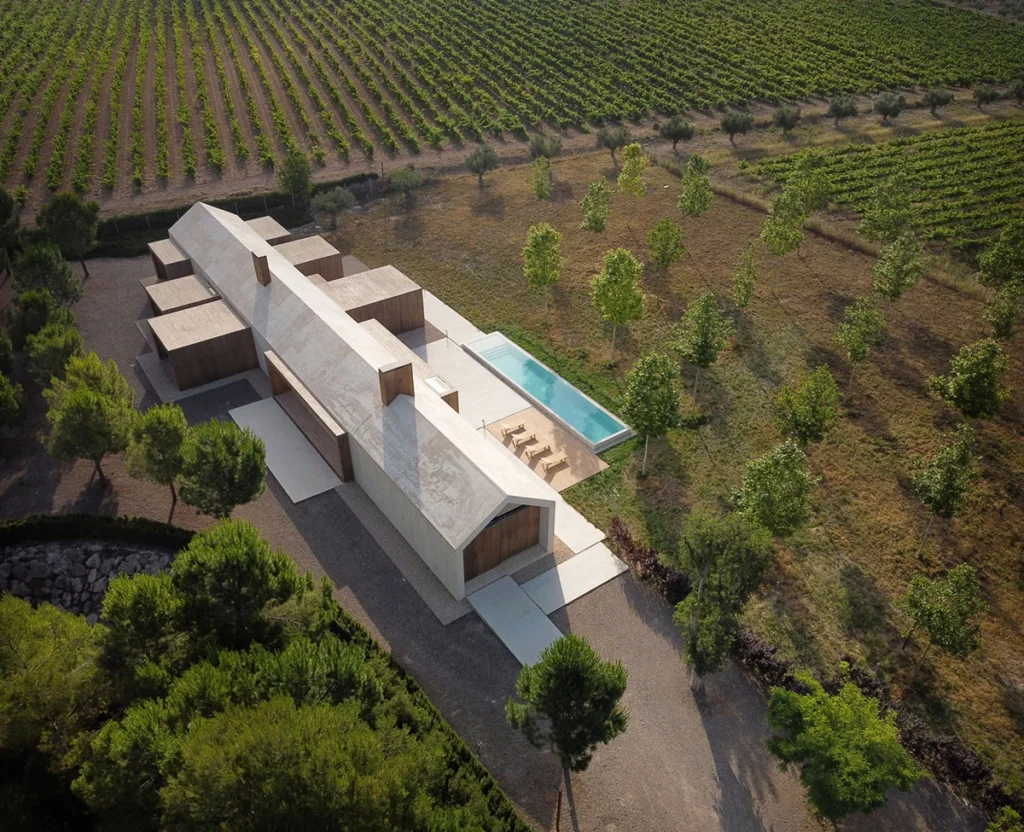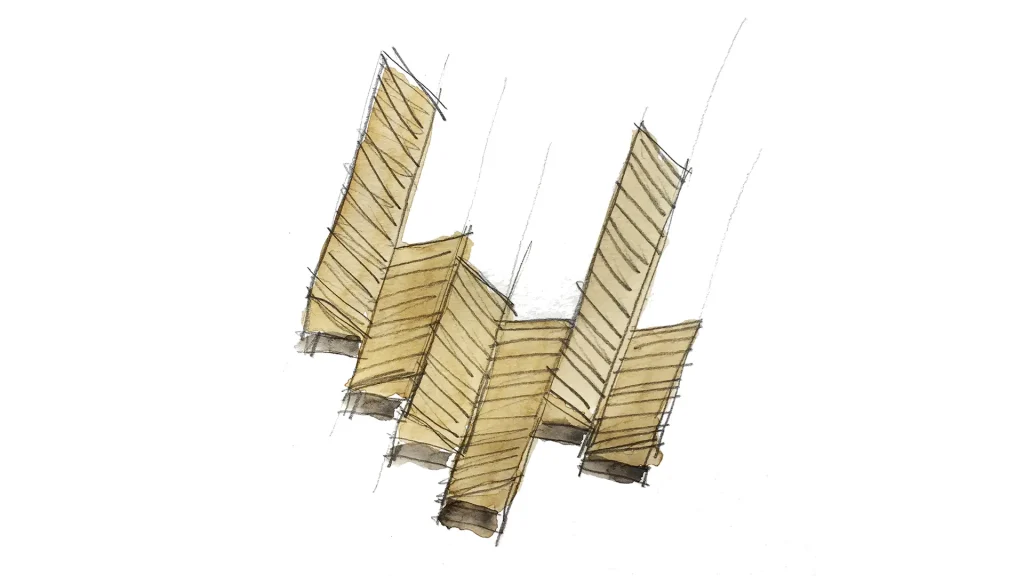
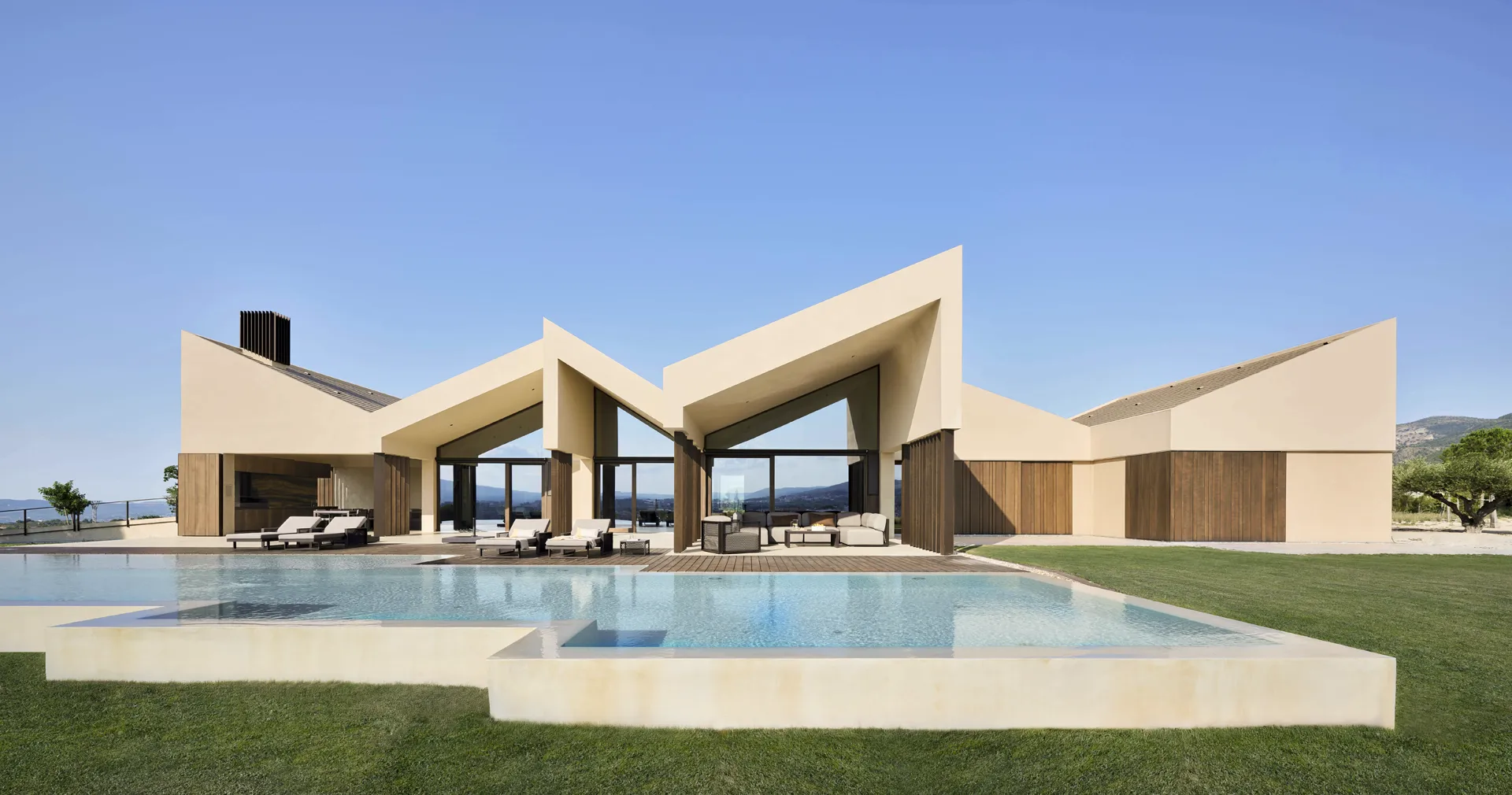
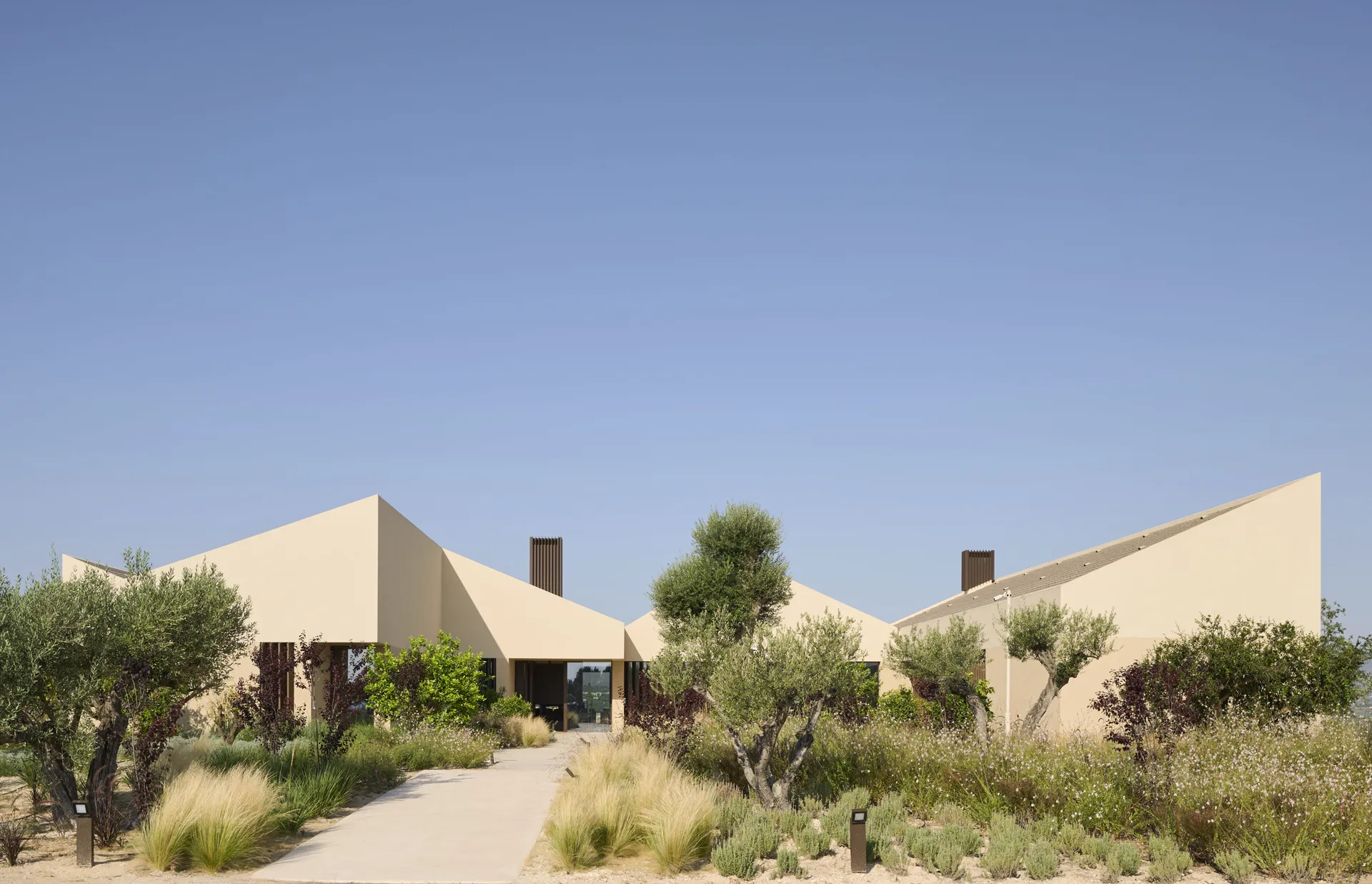
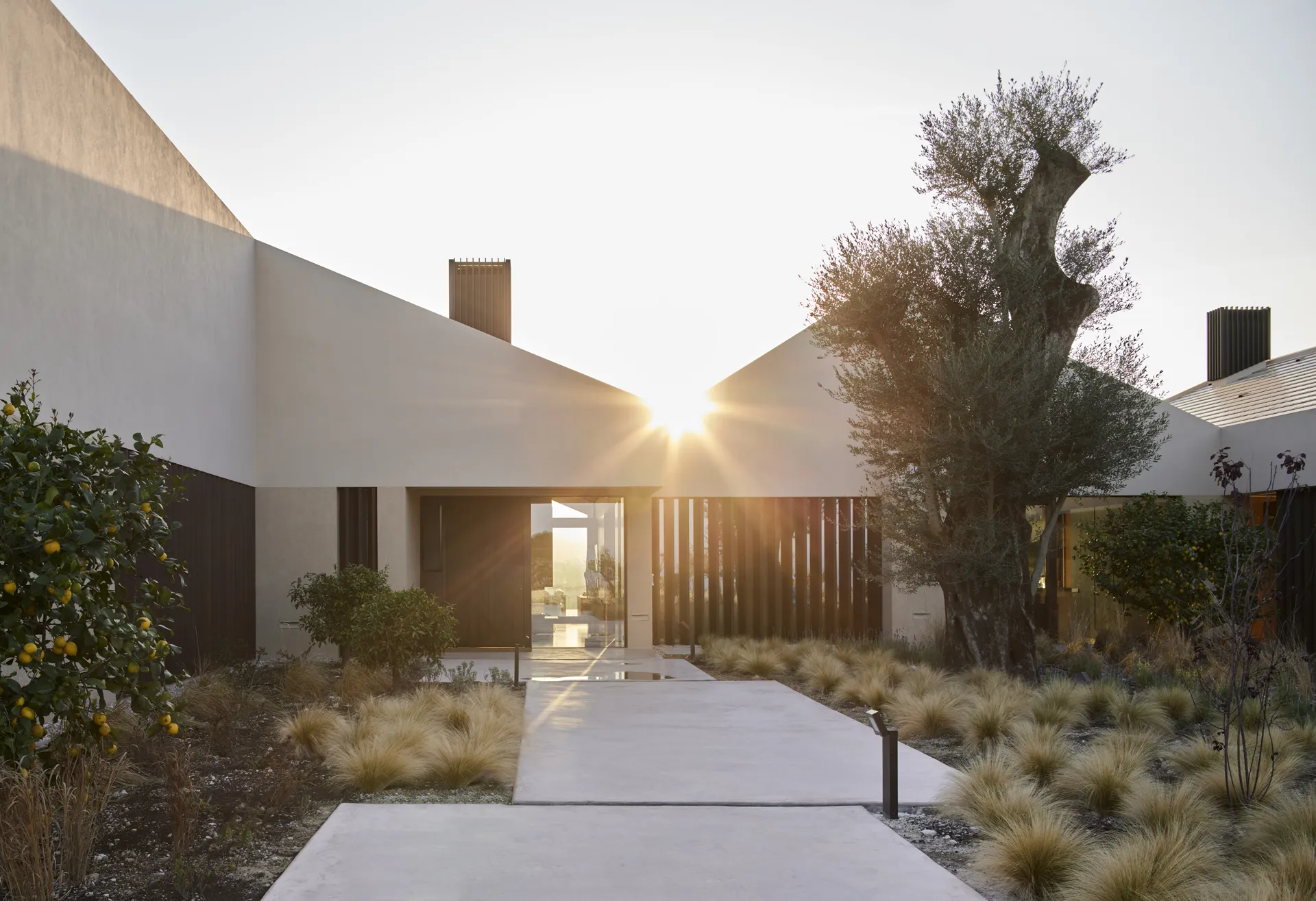
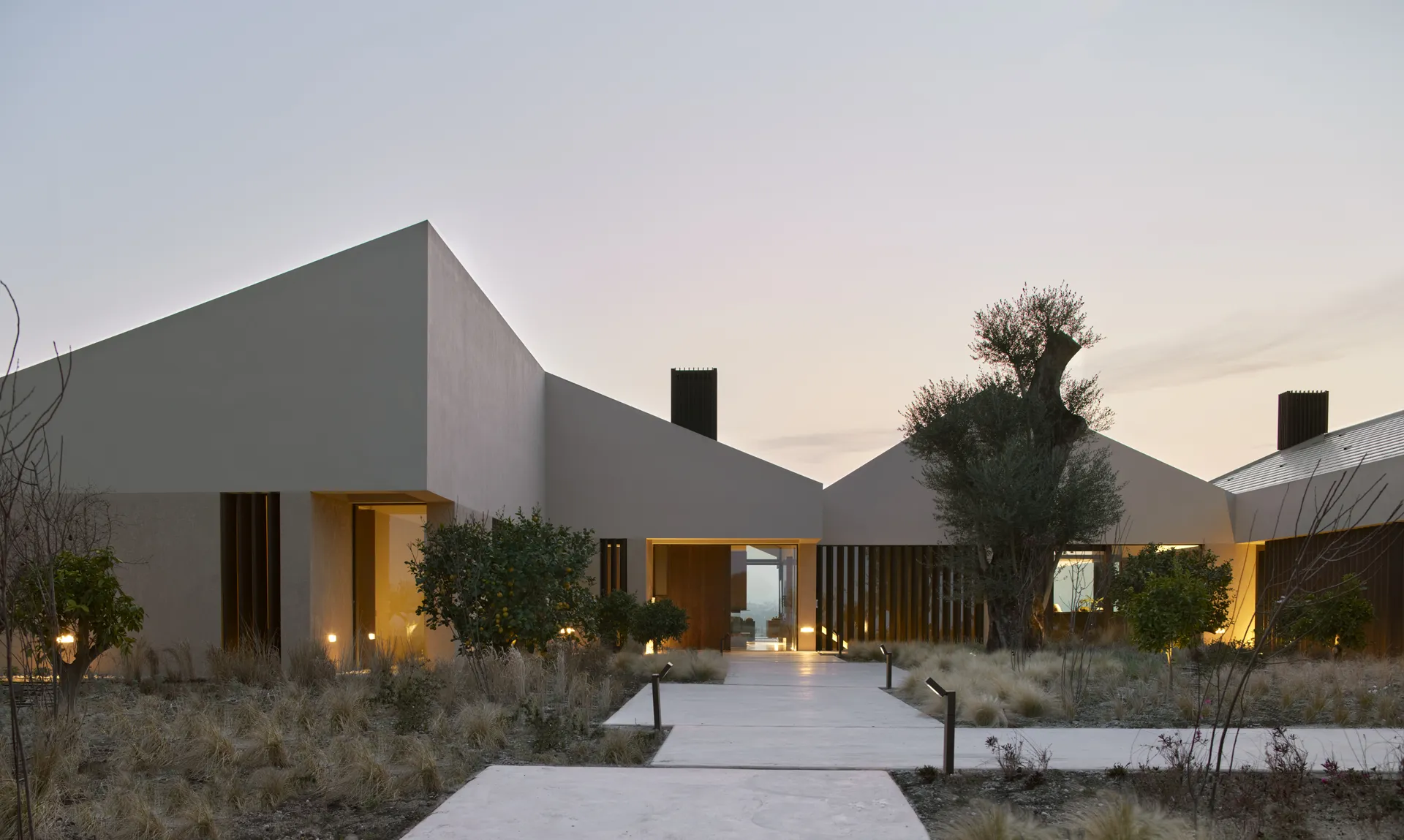
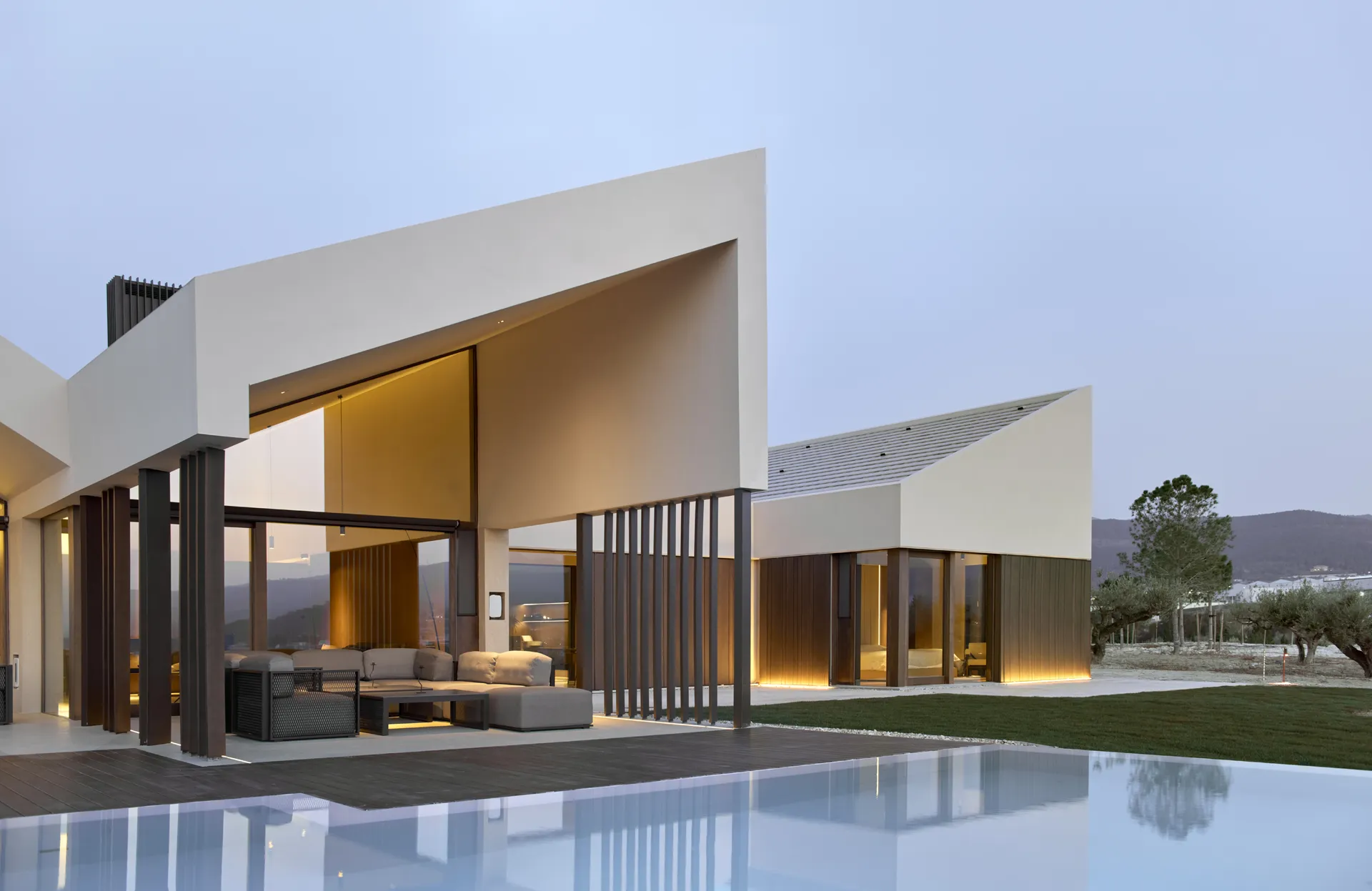
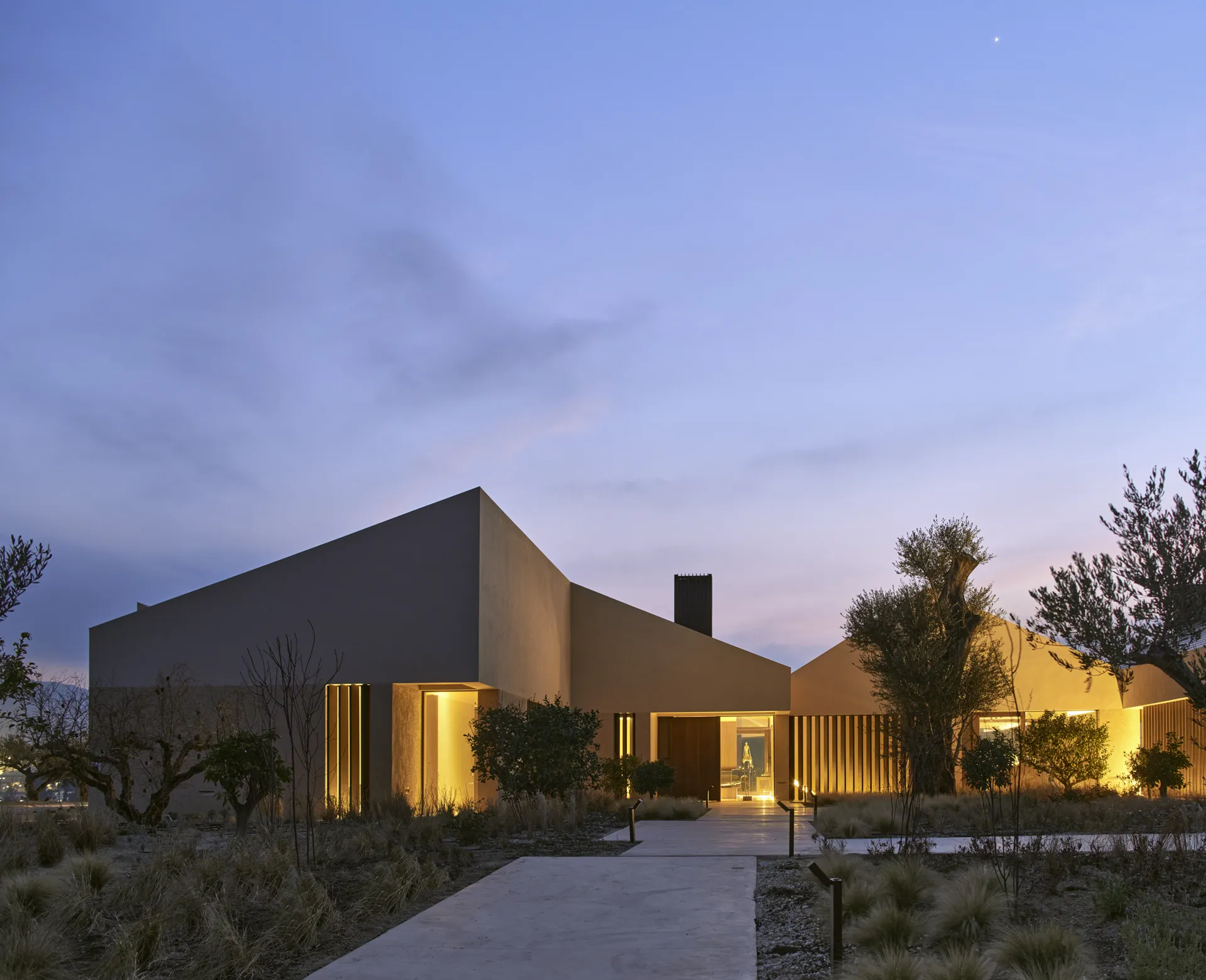
Located on a hill overlooking a rural town in Valencia, Clos de la Vila reinterprets the traditional local gable-roof house through a contemporary architectural language. Rather than replicating the vernacular model literally, the project transforms it into a composition of adjoining volumes, each topped with a mono-pitched roof. The alternating orientation of these roofs gives the house a dynamic silhouette and reinforces the identity of each volume, while maintaining a coherent overall form.
Composition and Spatial Strategy
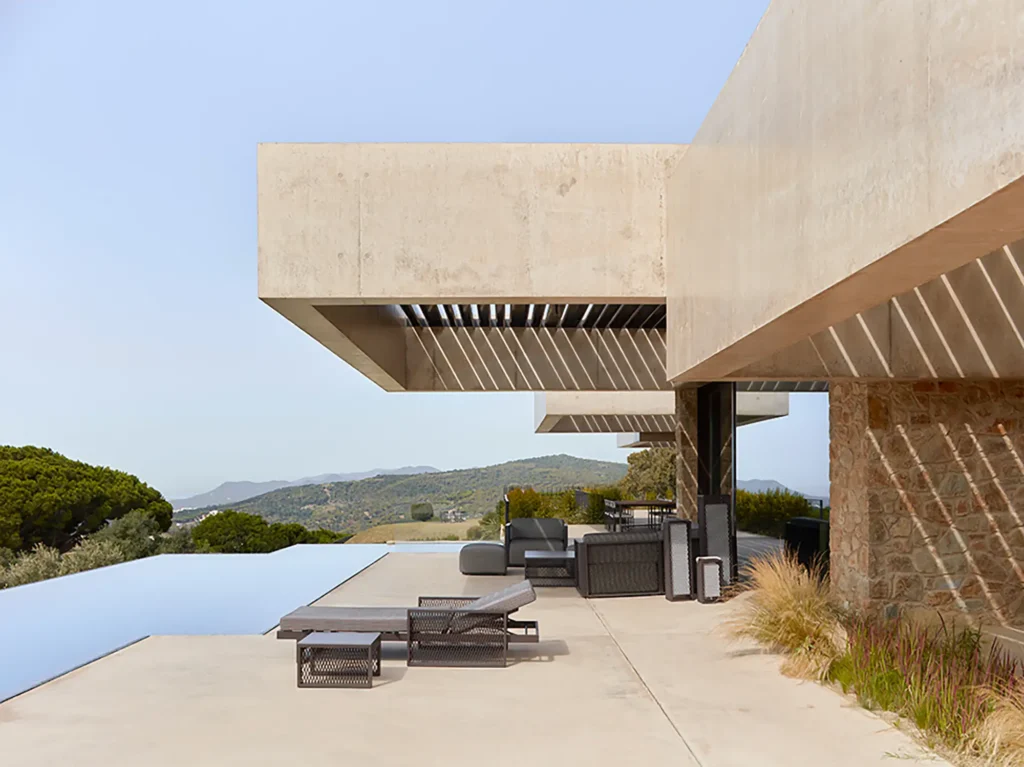
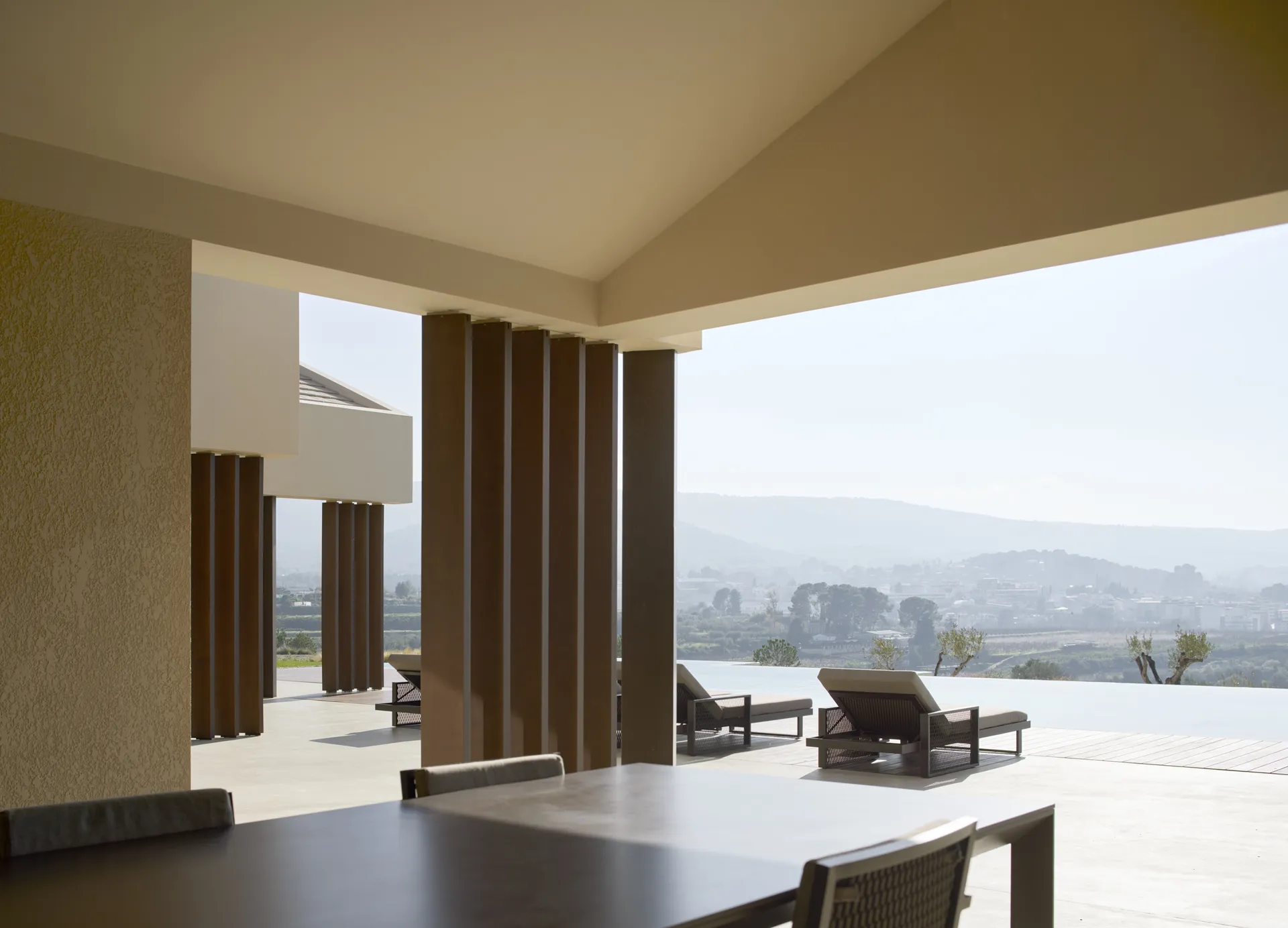
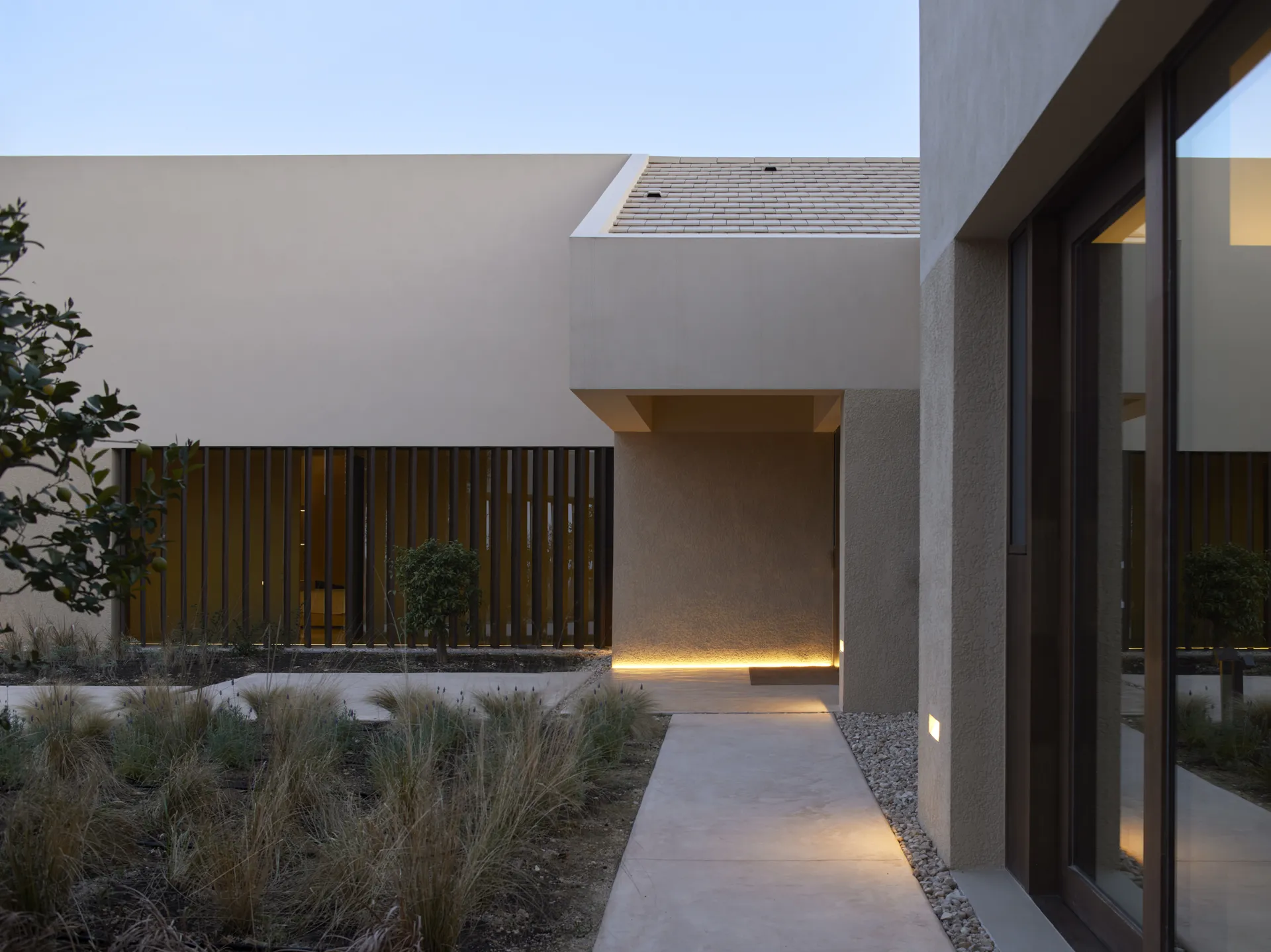
The layout emerges from fragmenting the building into a series of offset volumes. These subtle shifts create gaps at their intersections, giving rise to exterior spaces such as entrances, terraces and porches. In several areas, the roofs extend beyond the enclosed rooms to provide shade and shelter, strengthening the relationship between architecture and climate.
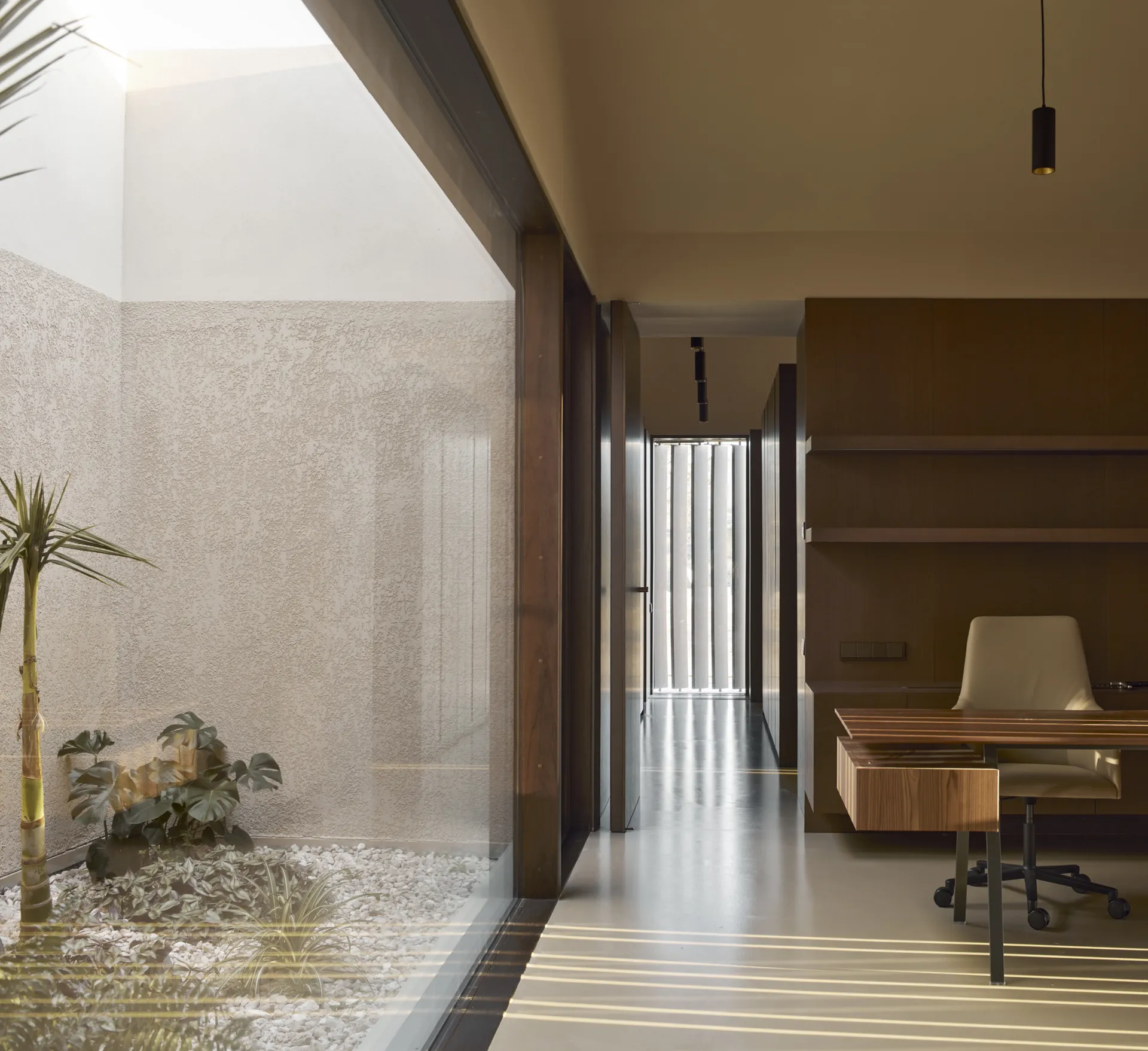
By extending certain volumes, the design forms a U-shaped plan around a central patio. This configuration not only helps to organise the programme, but also creates a protected outdoor space at the heart of the house. The patio acts as an intermediary zone between interior and exterior, bringing light deep into the plan and reinforcing the sense of openness that defines the project.
Materiality and Continuity
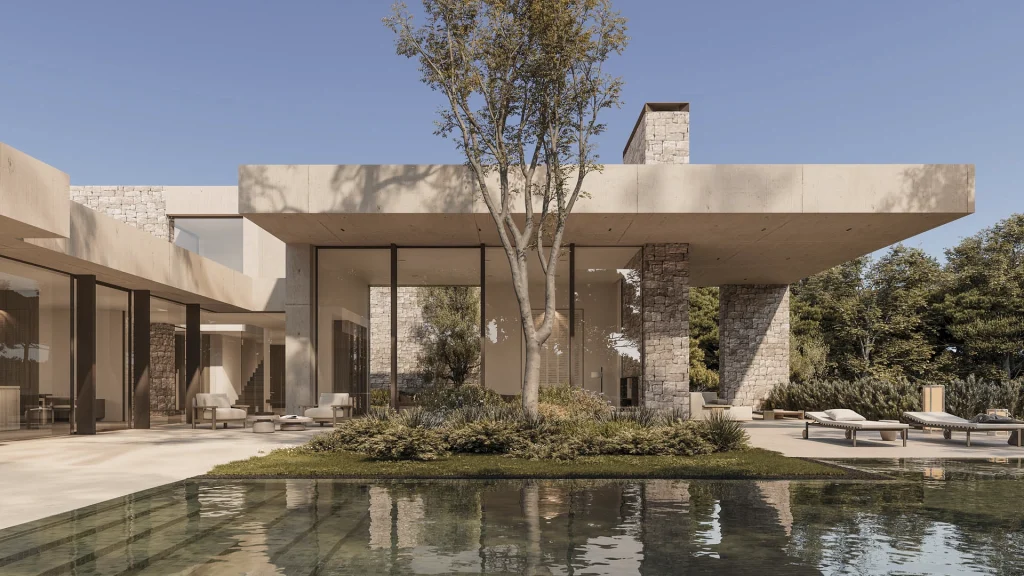
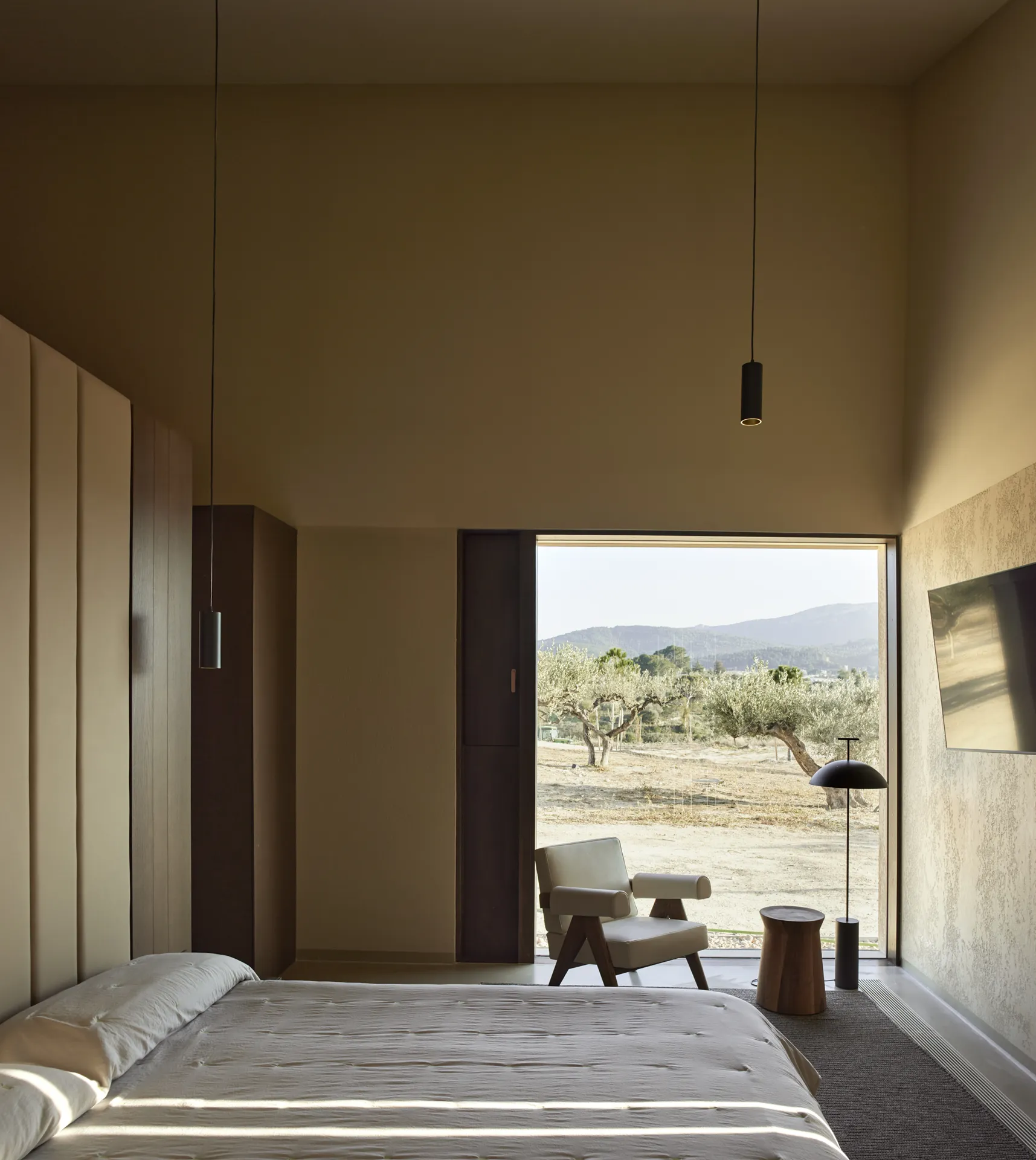
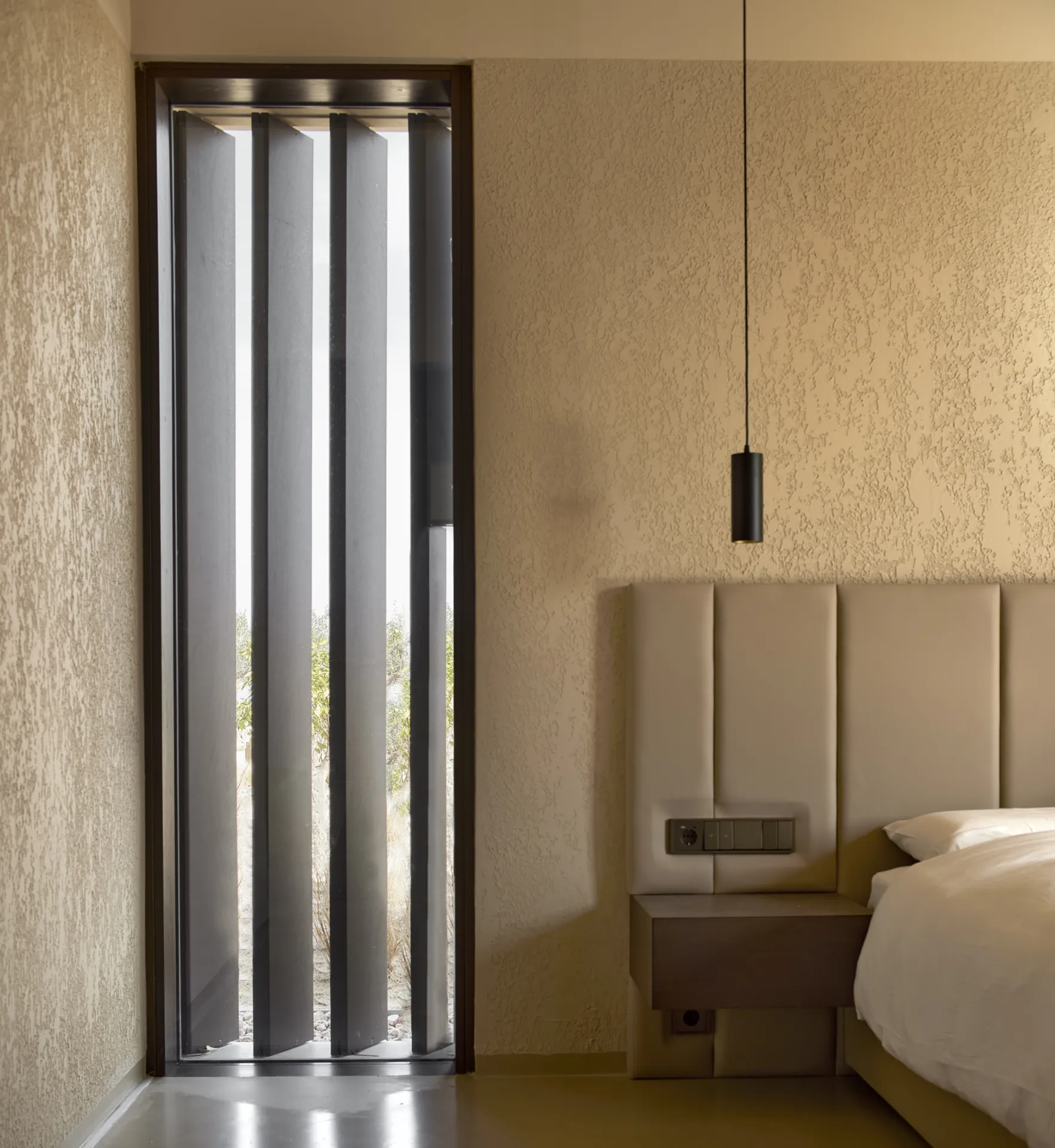
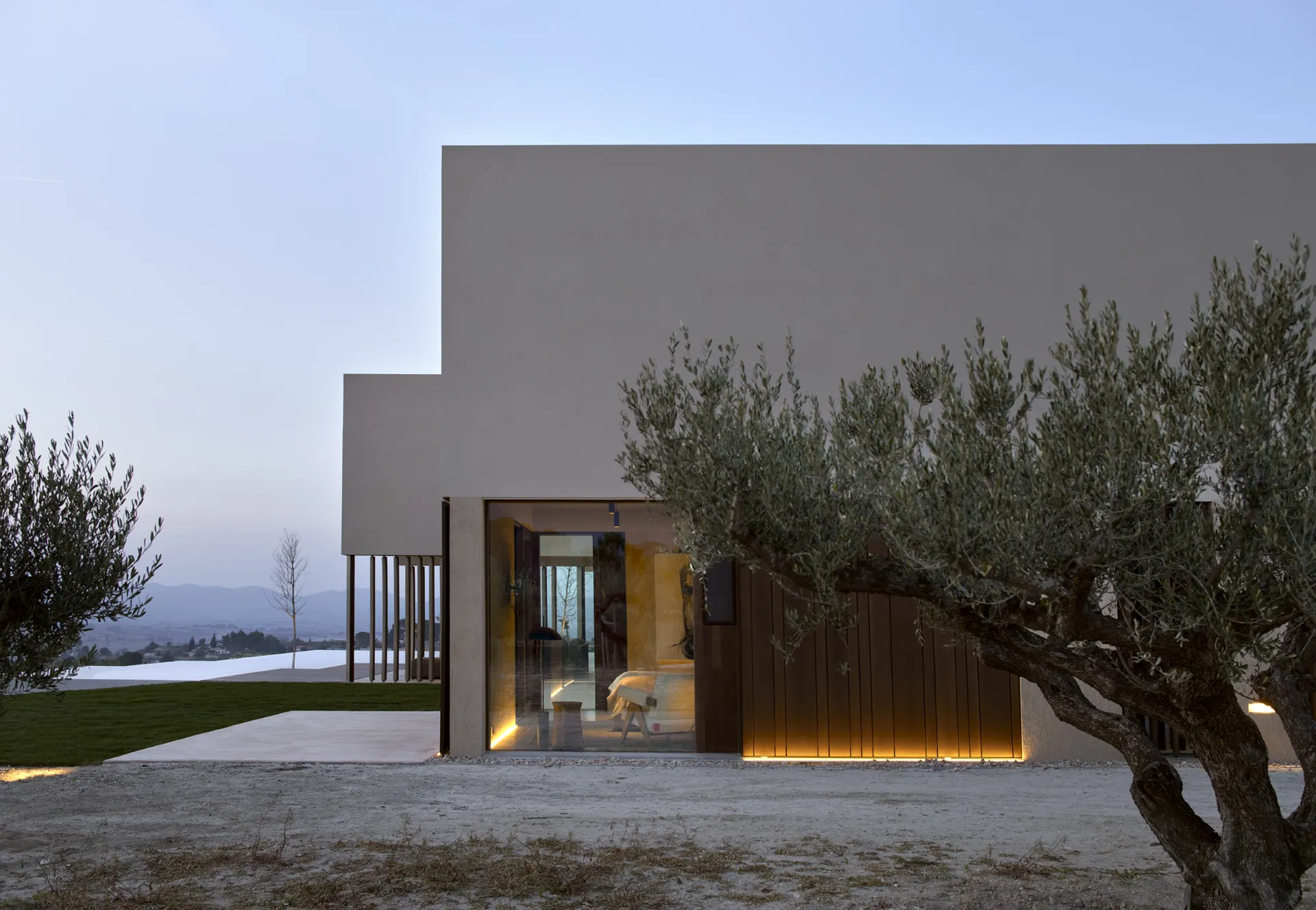
One of the house's main features is its use of two distinct materials, both on the façade and in the interior. A stucco plinth, coloured to match the tone of the local soil, rises from the ground to a height of eight feet, framing the openings for windows and doors and visually anchoring the building to the site. Above this base, the walls are finished in a lighter rough stucco, while the roof is clad in tiles of the same colour, creating a restrained and harmonious palette.
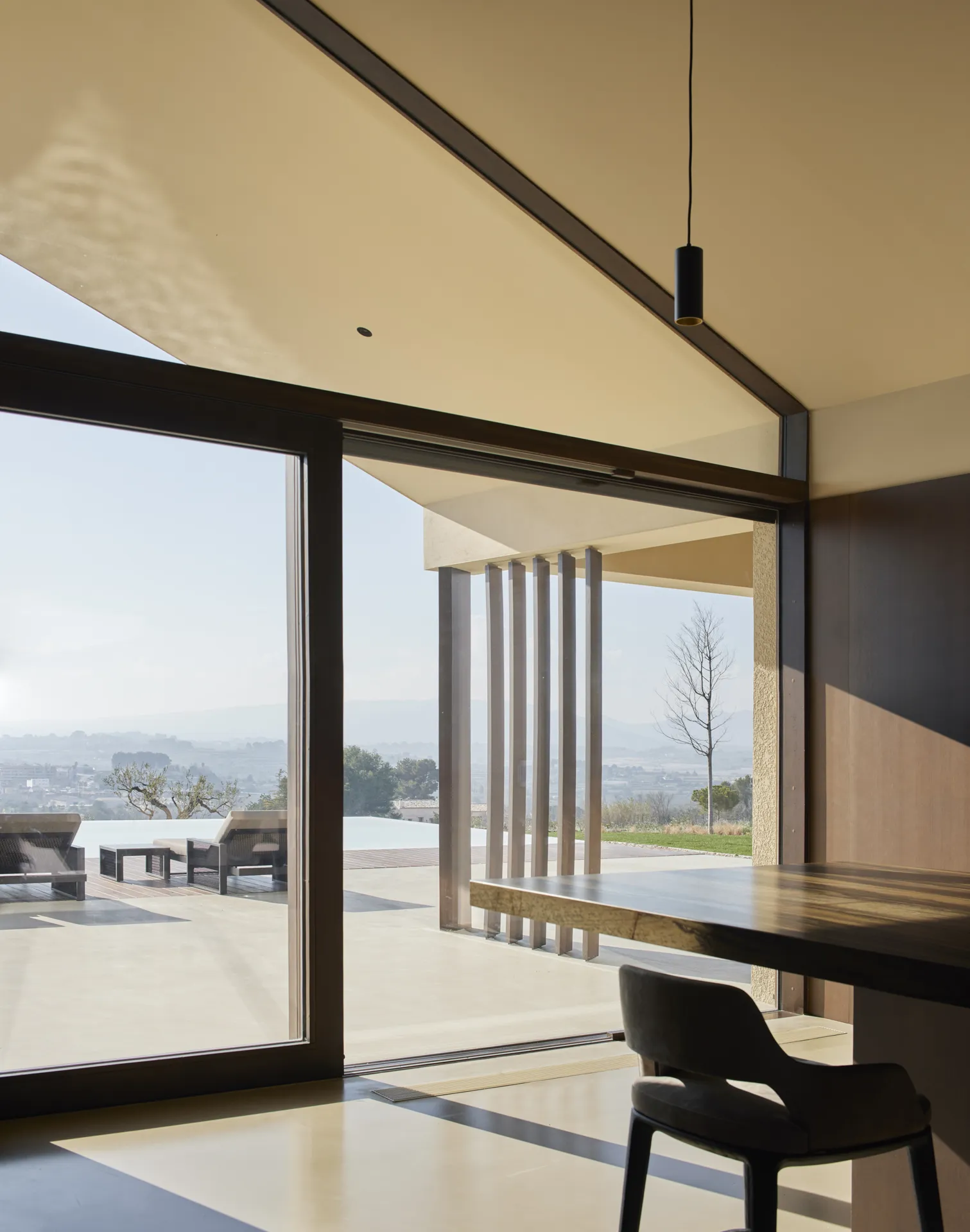
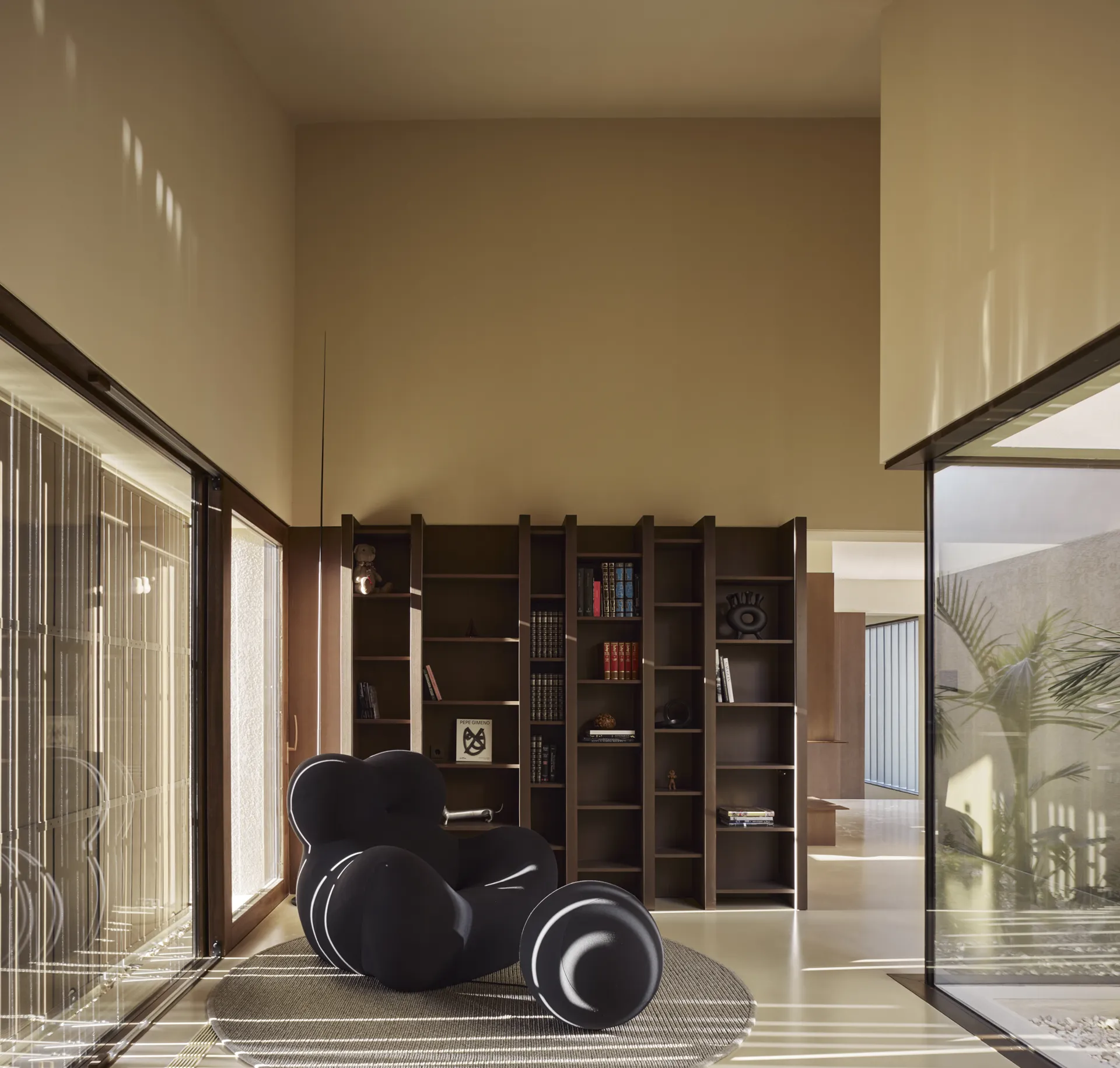
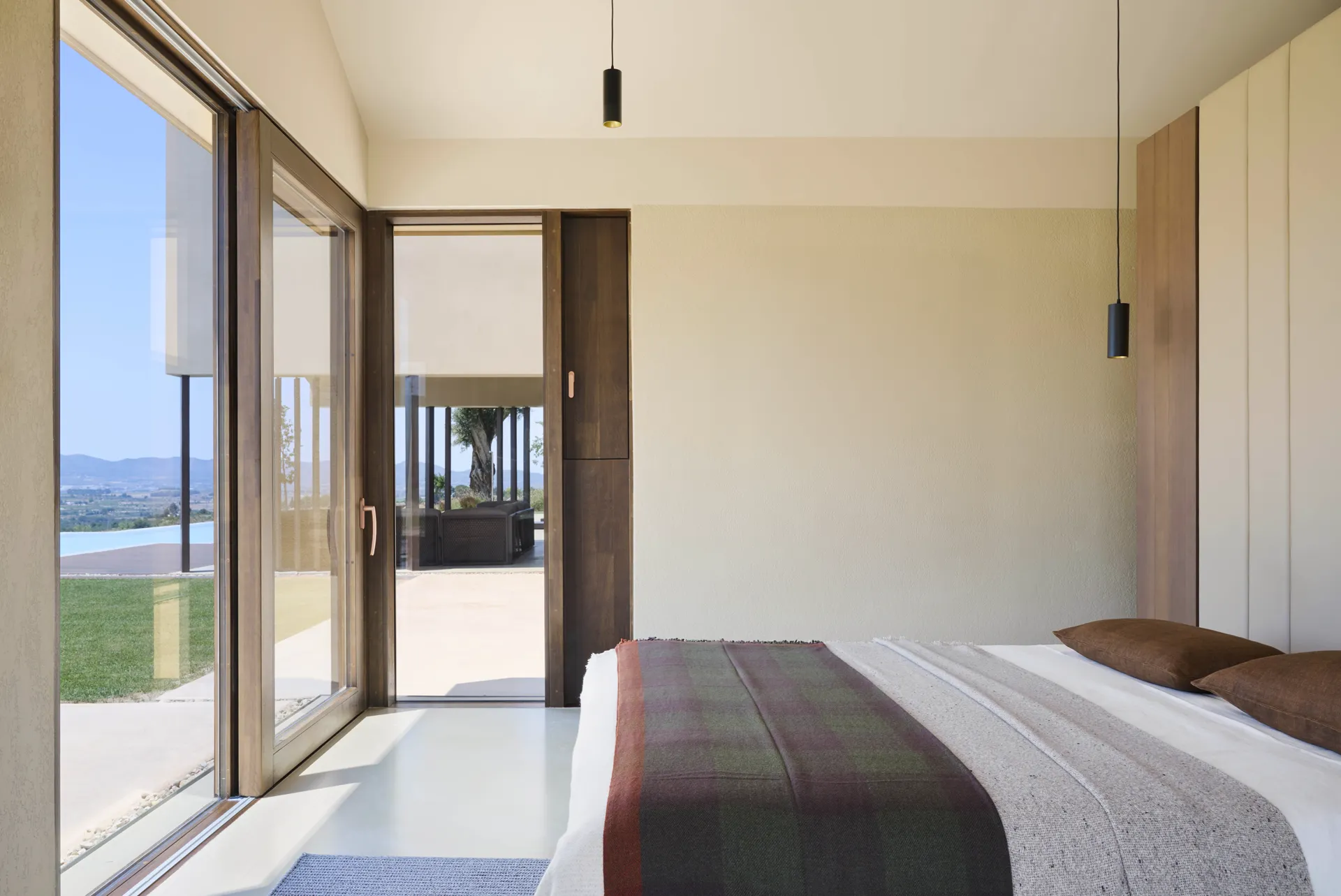
The same flooring is used throughout the house, allowing the interior spaces to extend seamlessly outdoors. This continuity reinforces the fluidity of the design and blurs the boundary between enclosed rooms and open-air living areas. The material also continues into the pool area, where it is complemented by wooden platforms that echo the shape of the water and help to define a more intimate and welcoming atmosphere.
Organisation of the Programme
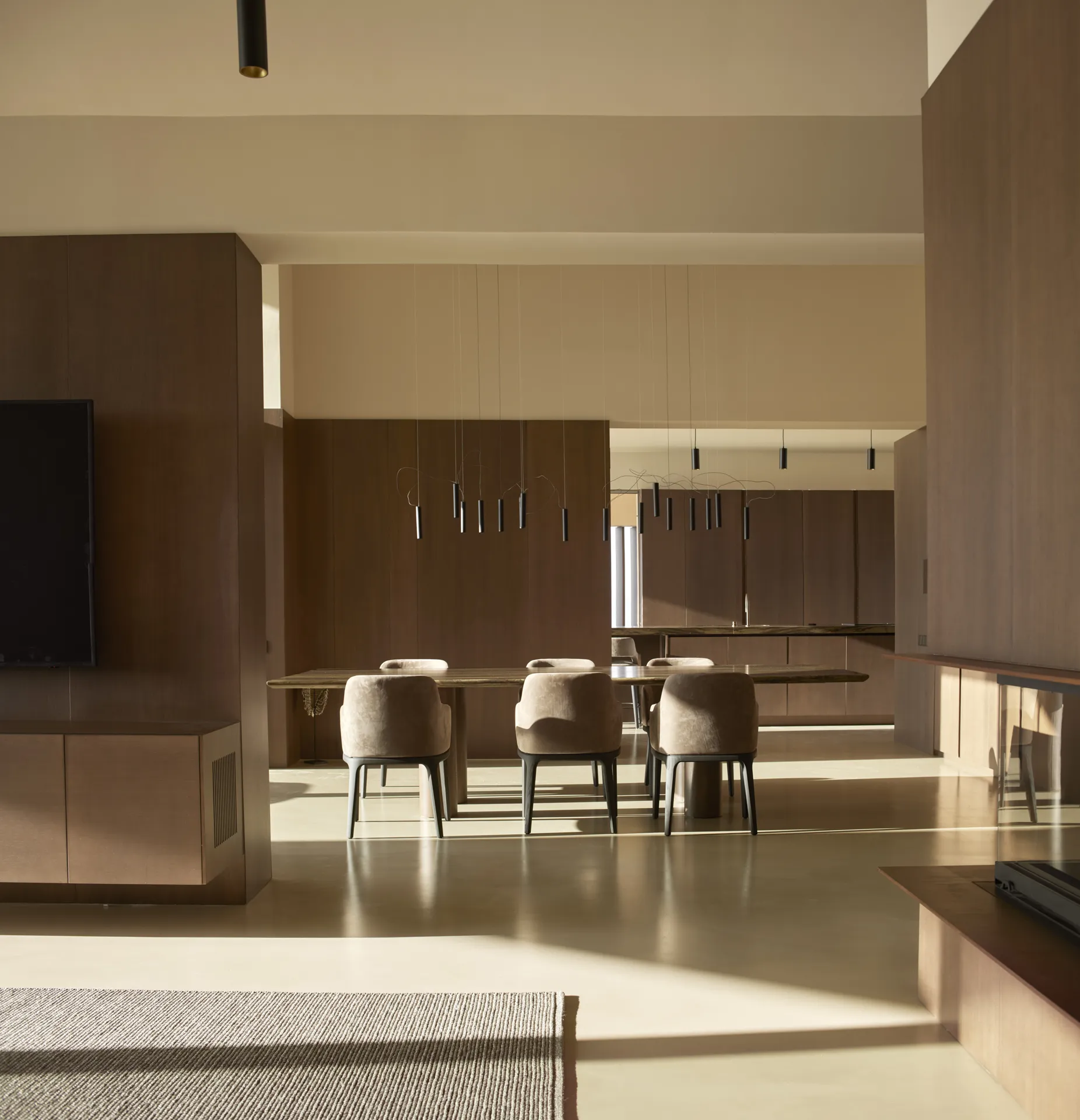
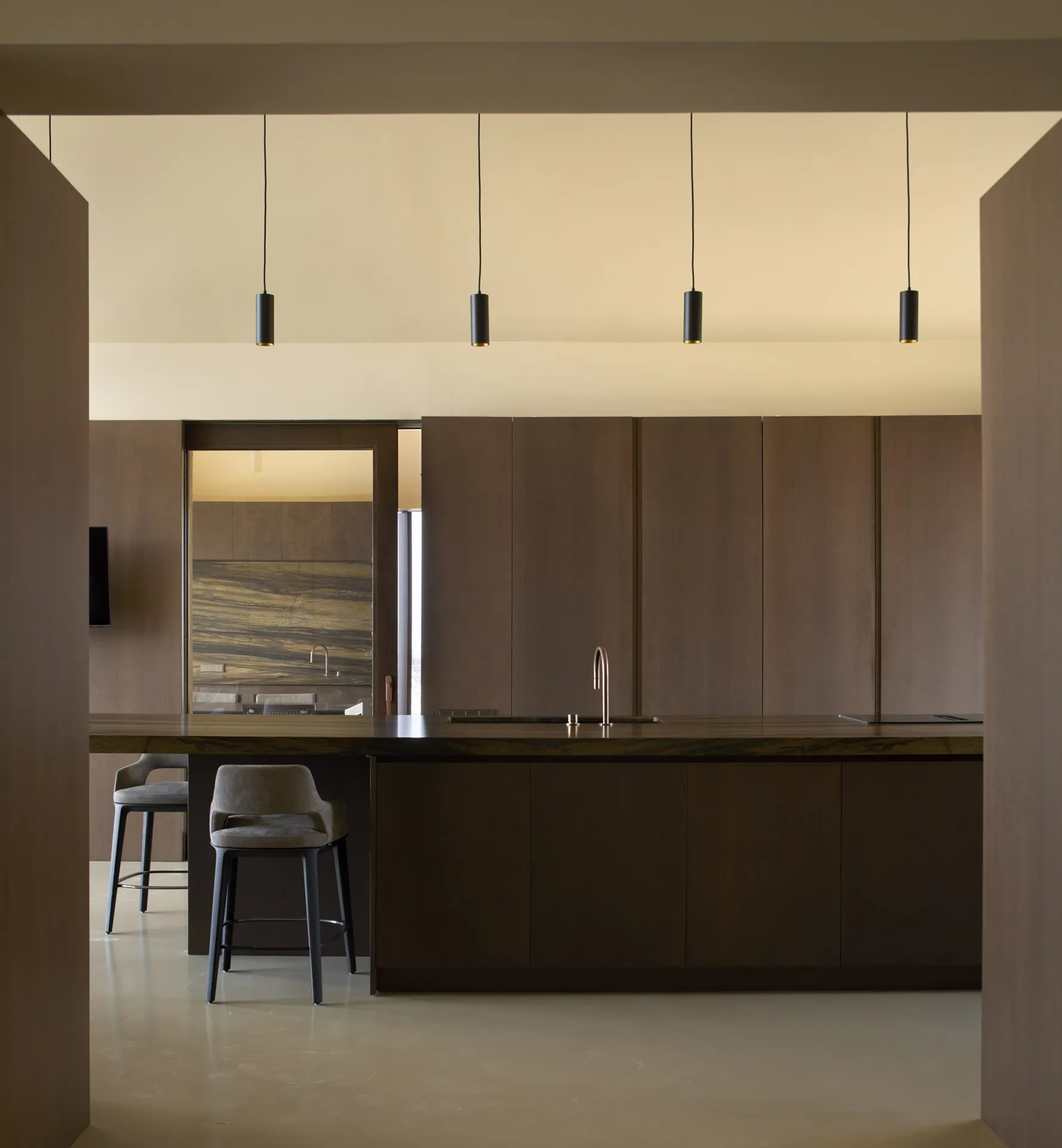
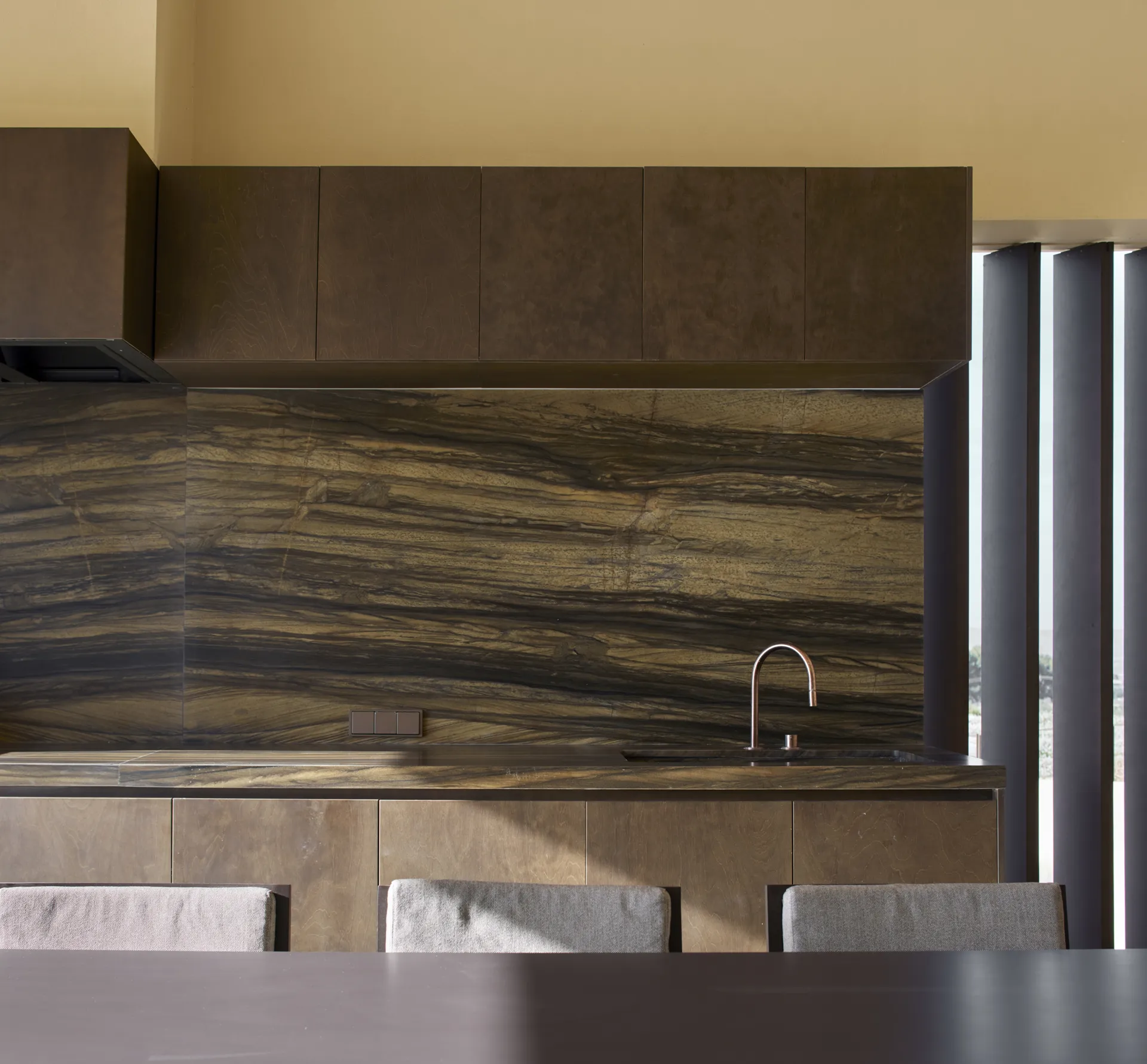
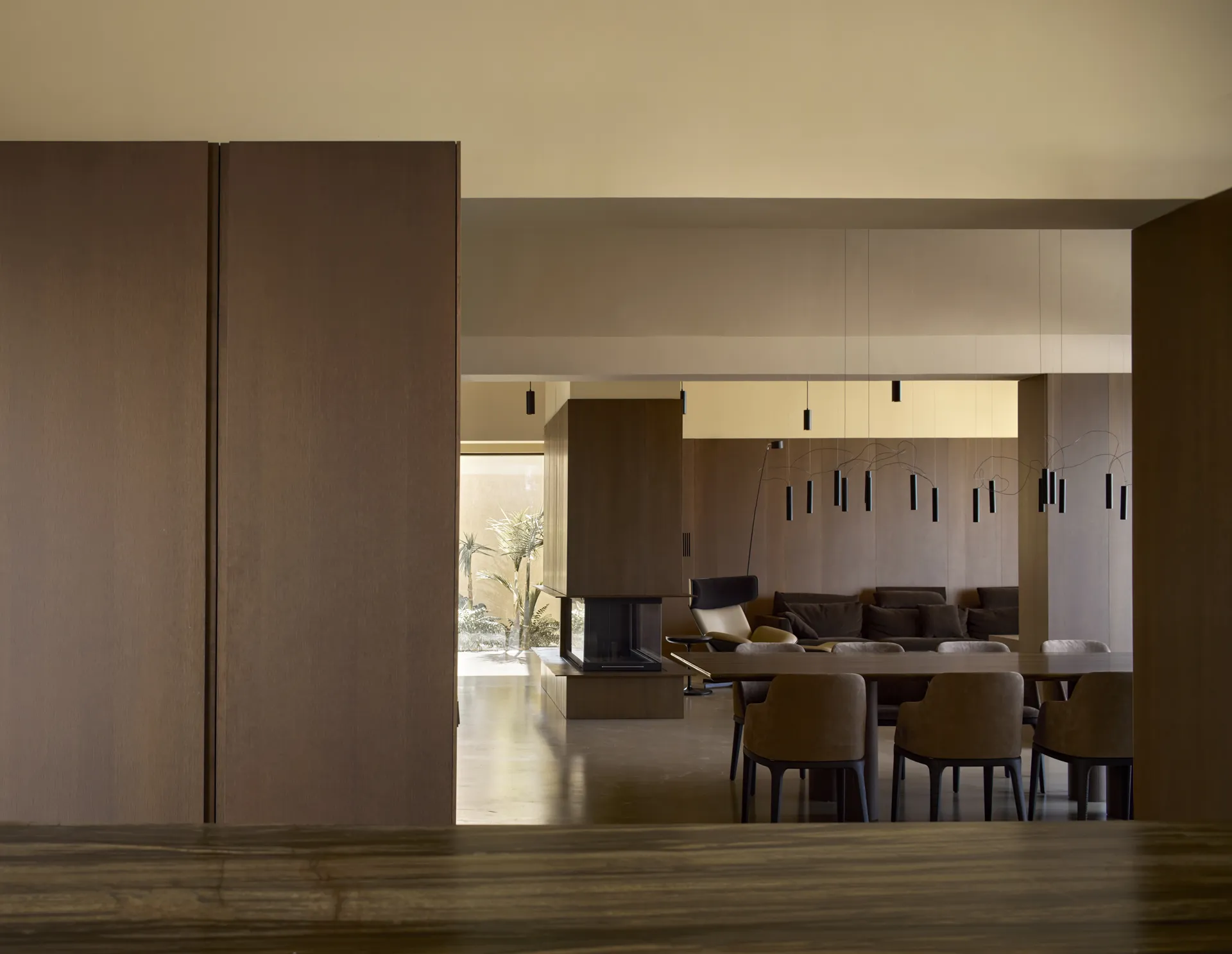
The programme is arranged on a single floor, divided into two parts by the central entrance. To the right lies the day area, conceived as a fluid open-plan sequence that brings together the living room, dining room, kitchen and outdoor barbecue area. This side of the house is designed to encourage gathering, movement and visual continuity, while maintaining a direct connection to the surrounding terraces and garden.
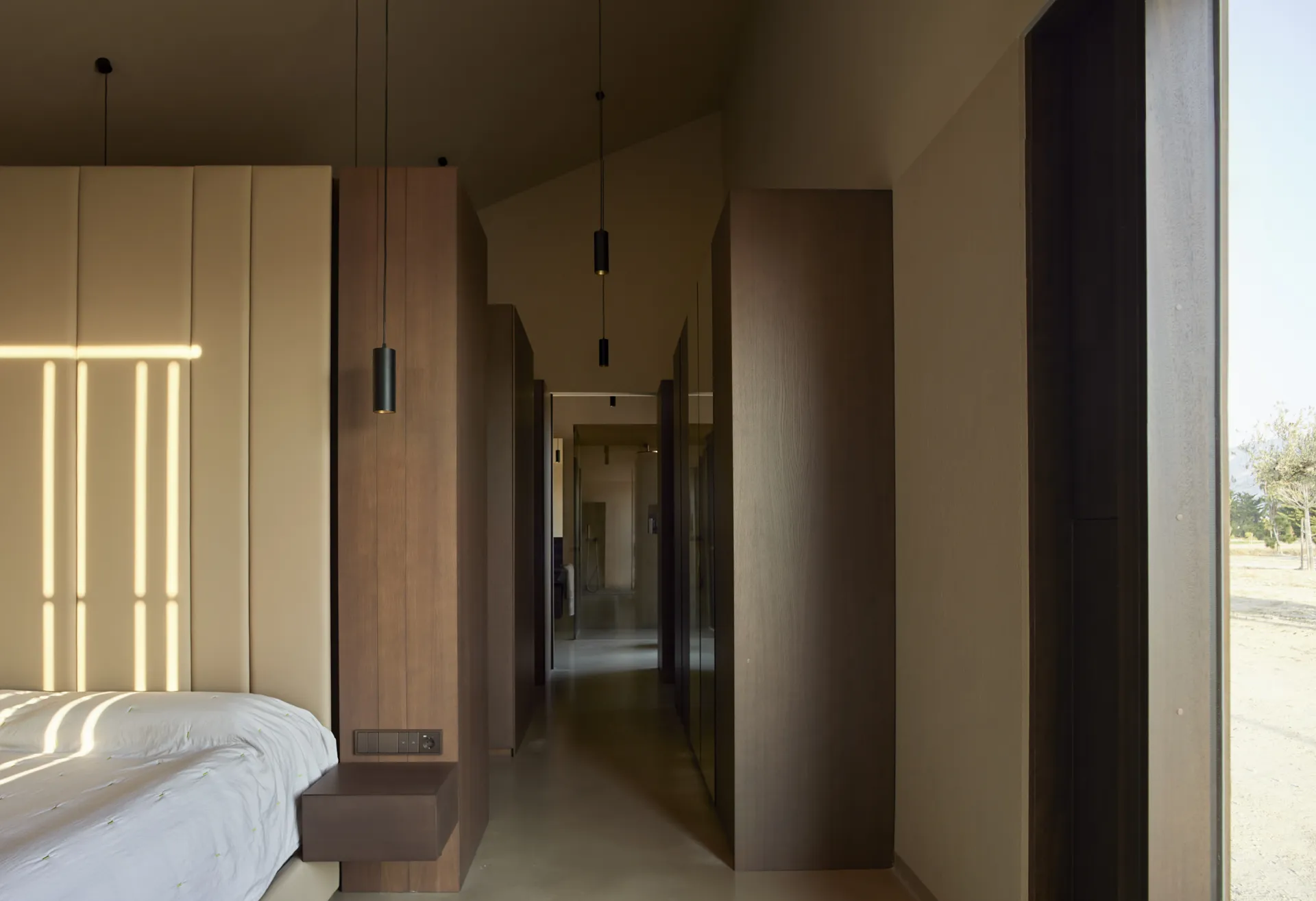
To the left, the night area is more compartmentalised and private. It includes three bedrooms, each with its own bathroom and dressing room, as well as a main suite and a laundry room. This more enclosed arrangement responds to the need for privacy and calm, creating a clear distinction between the social and domestic rhythms of the house.
Warmth in the Interior
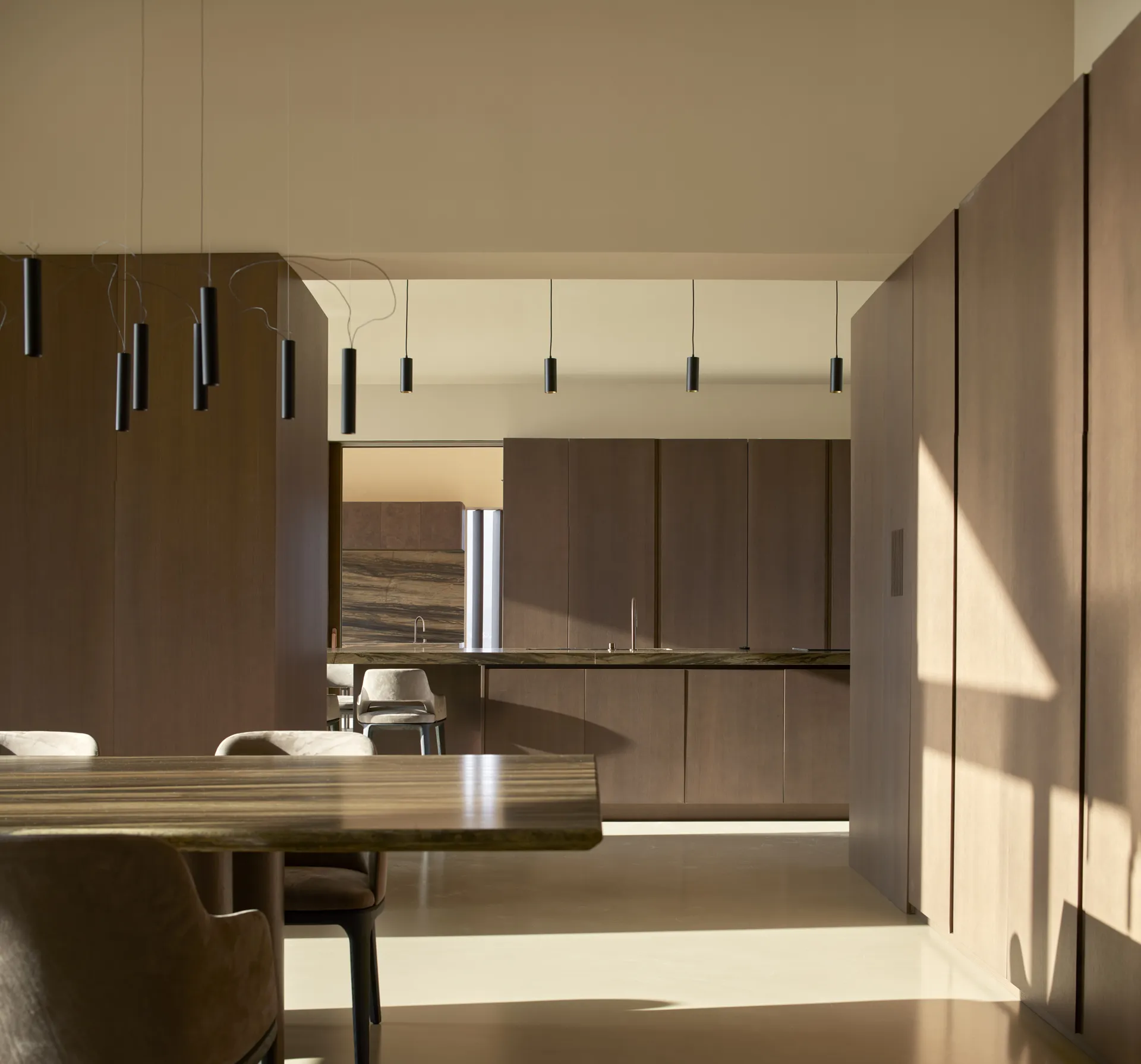
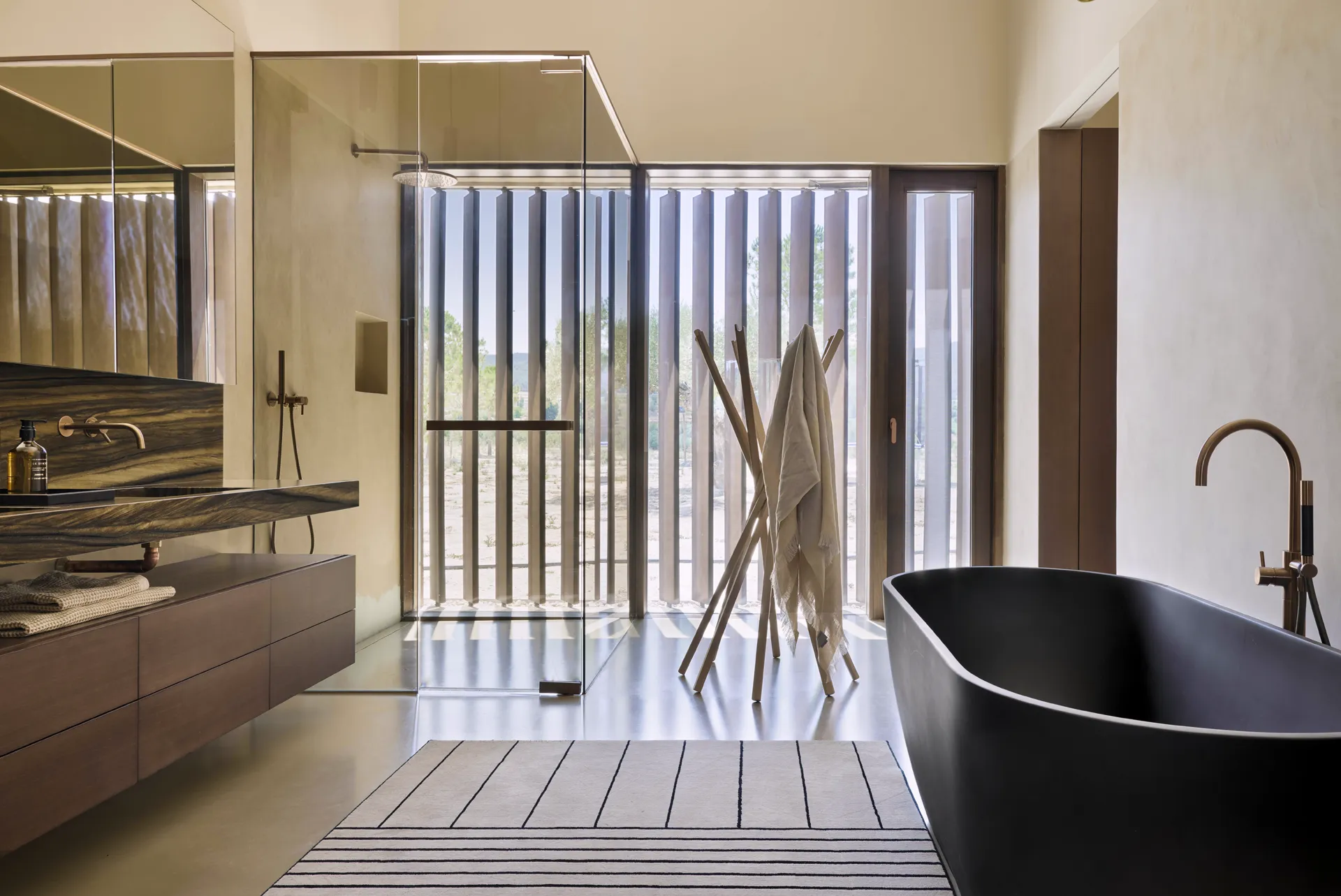
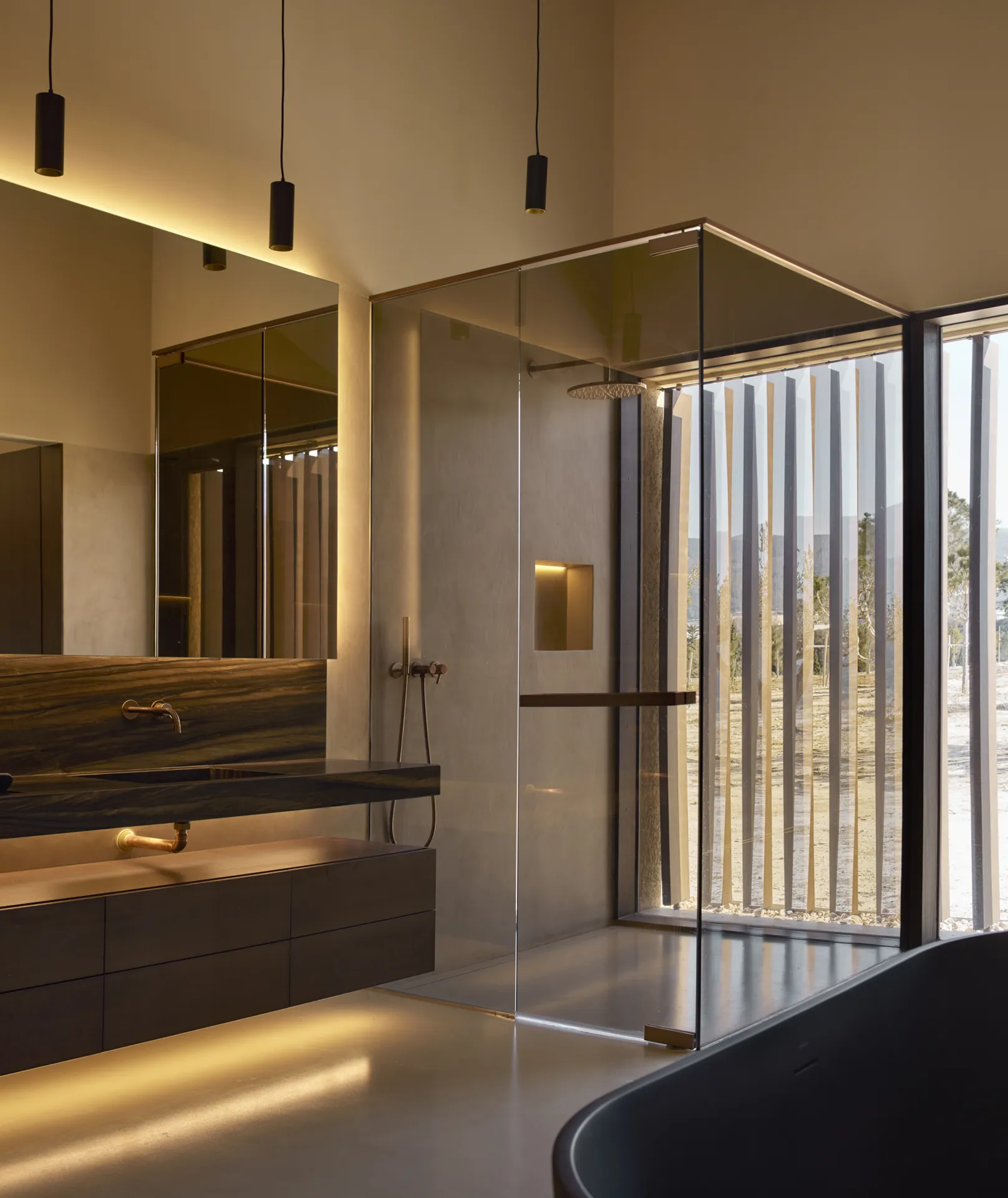
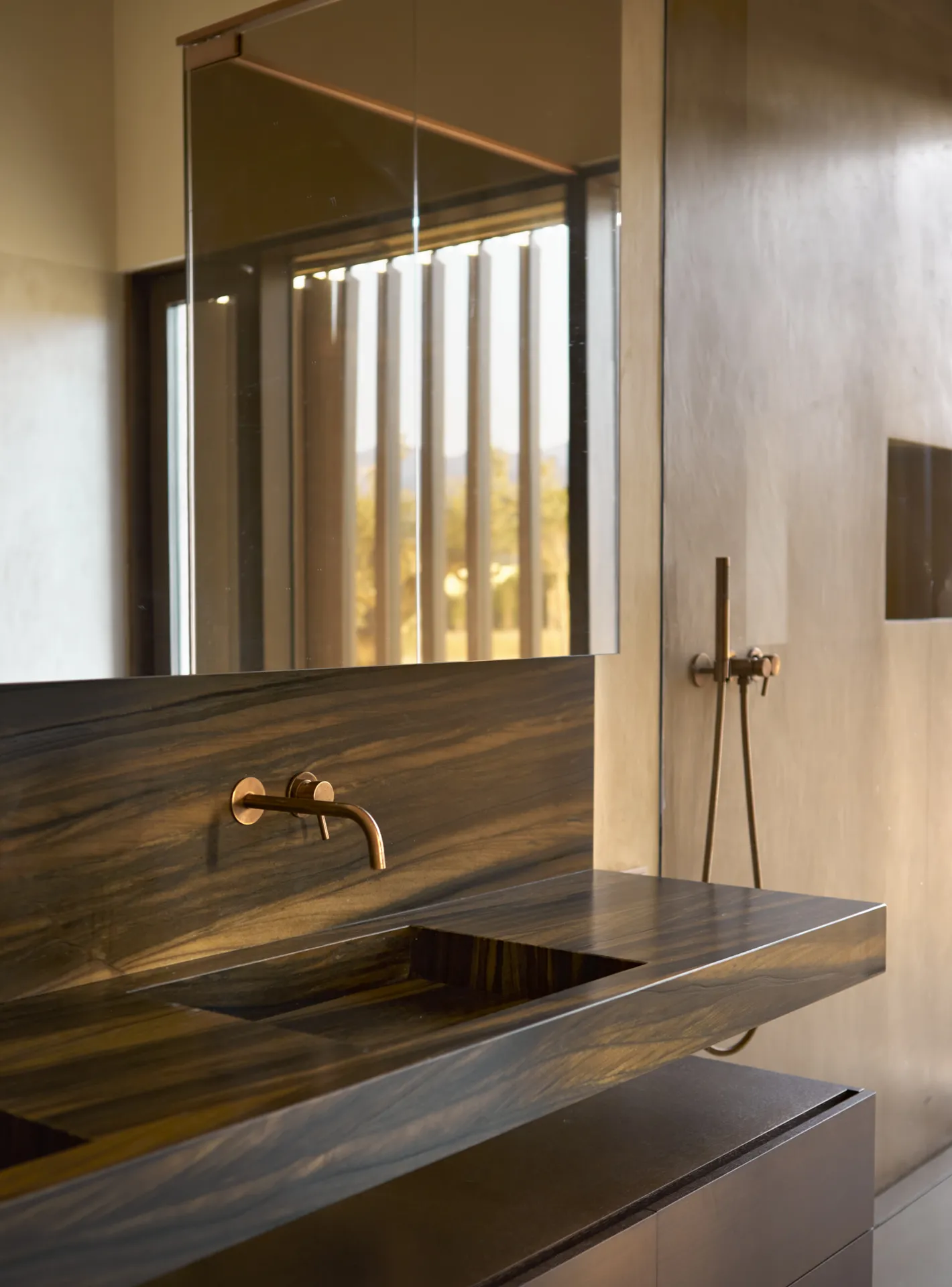
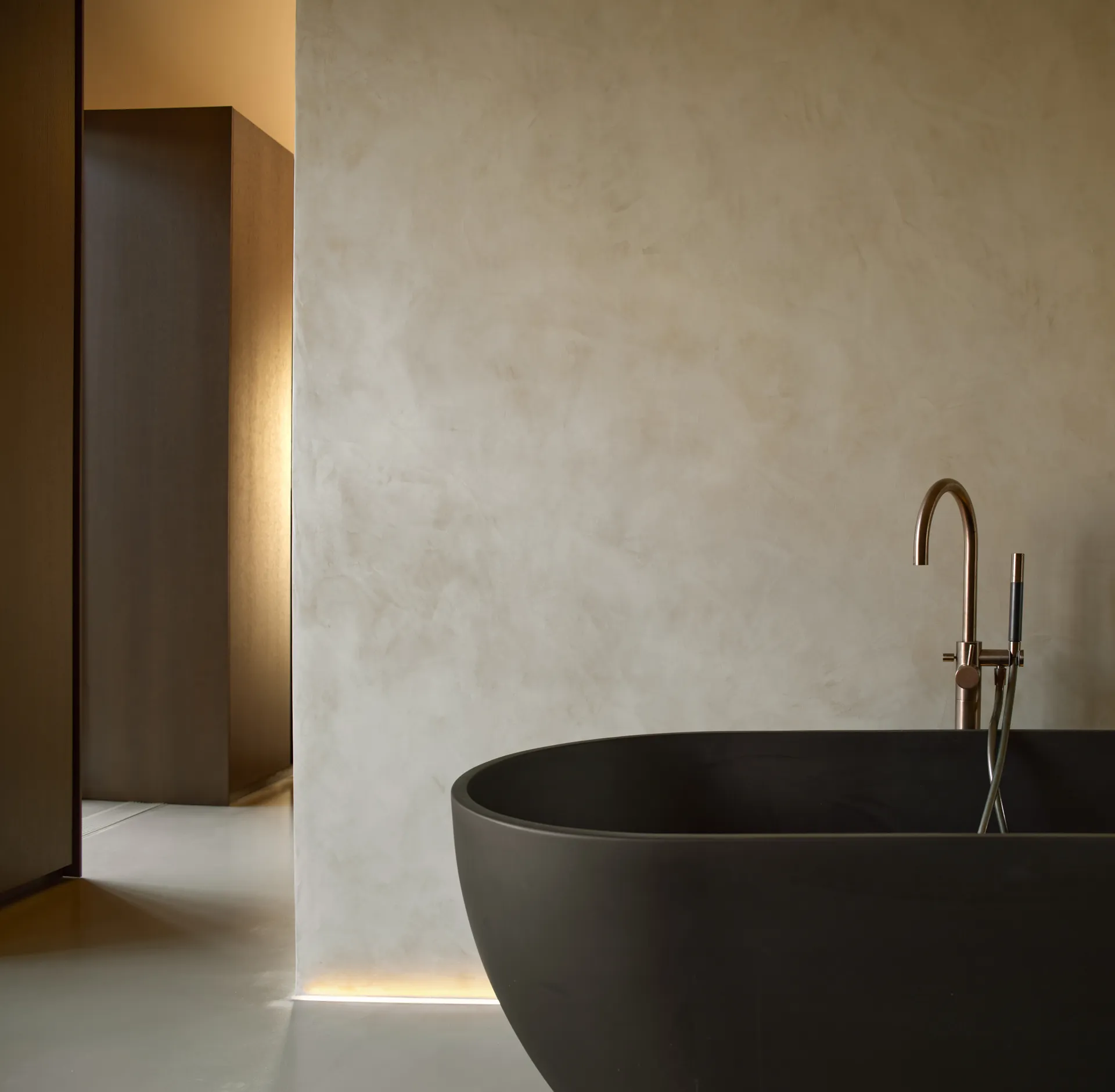
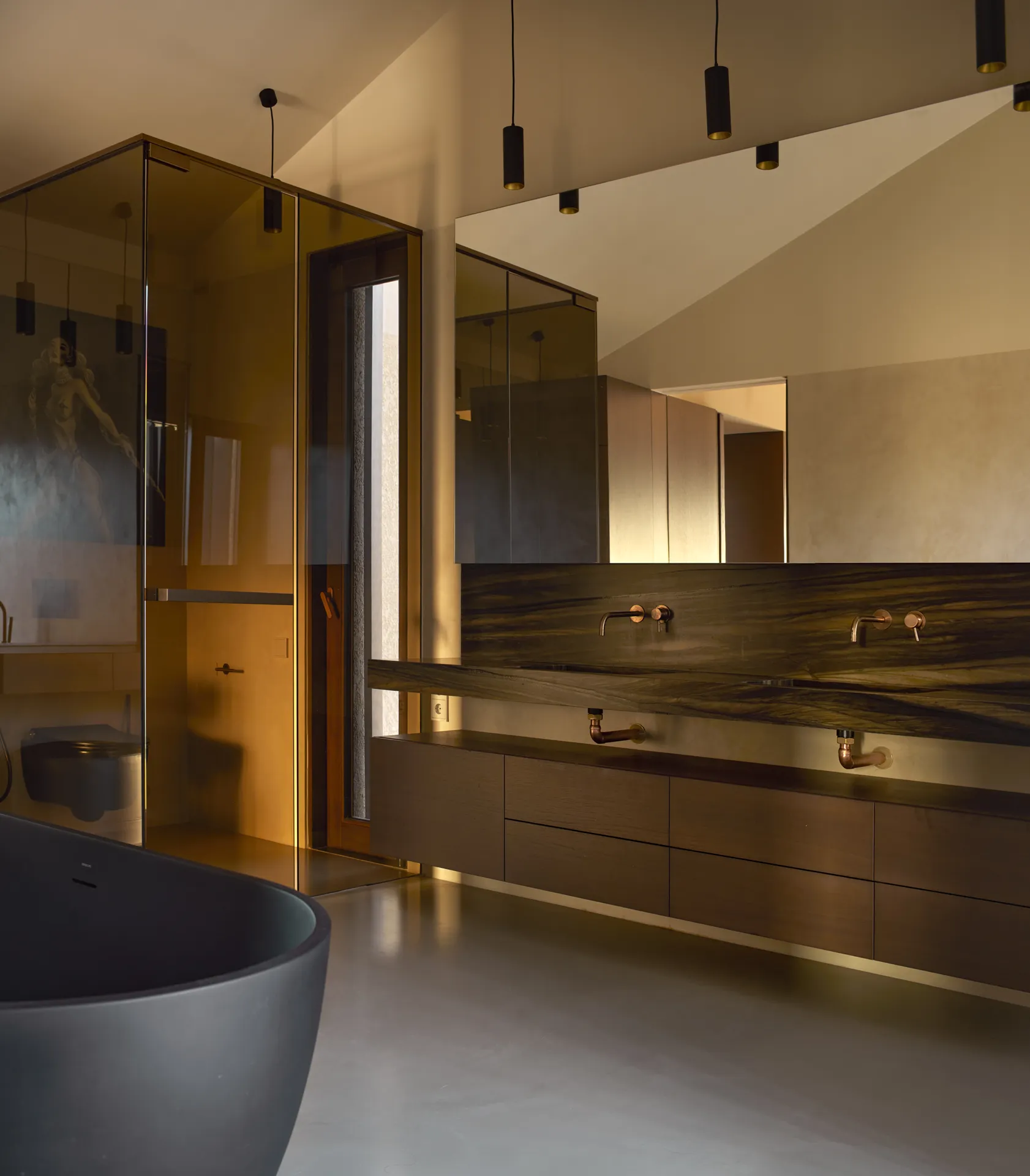
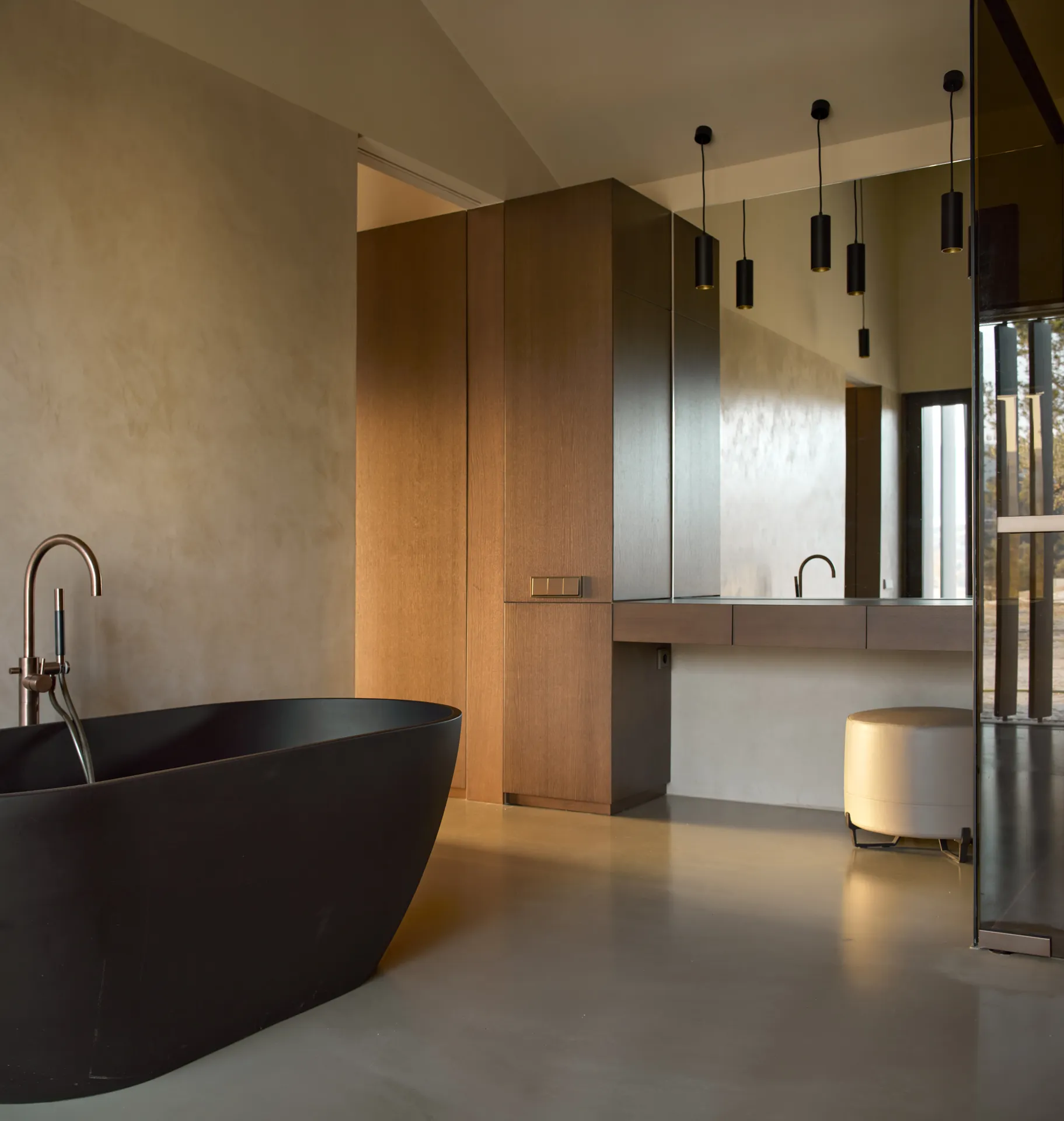
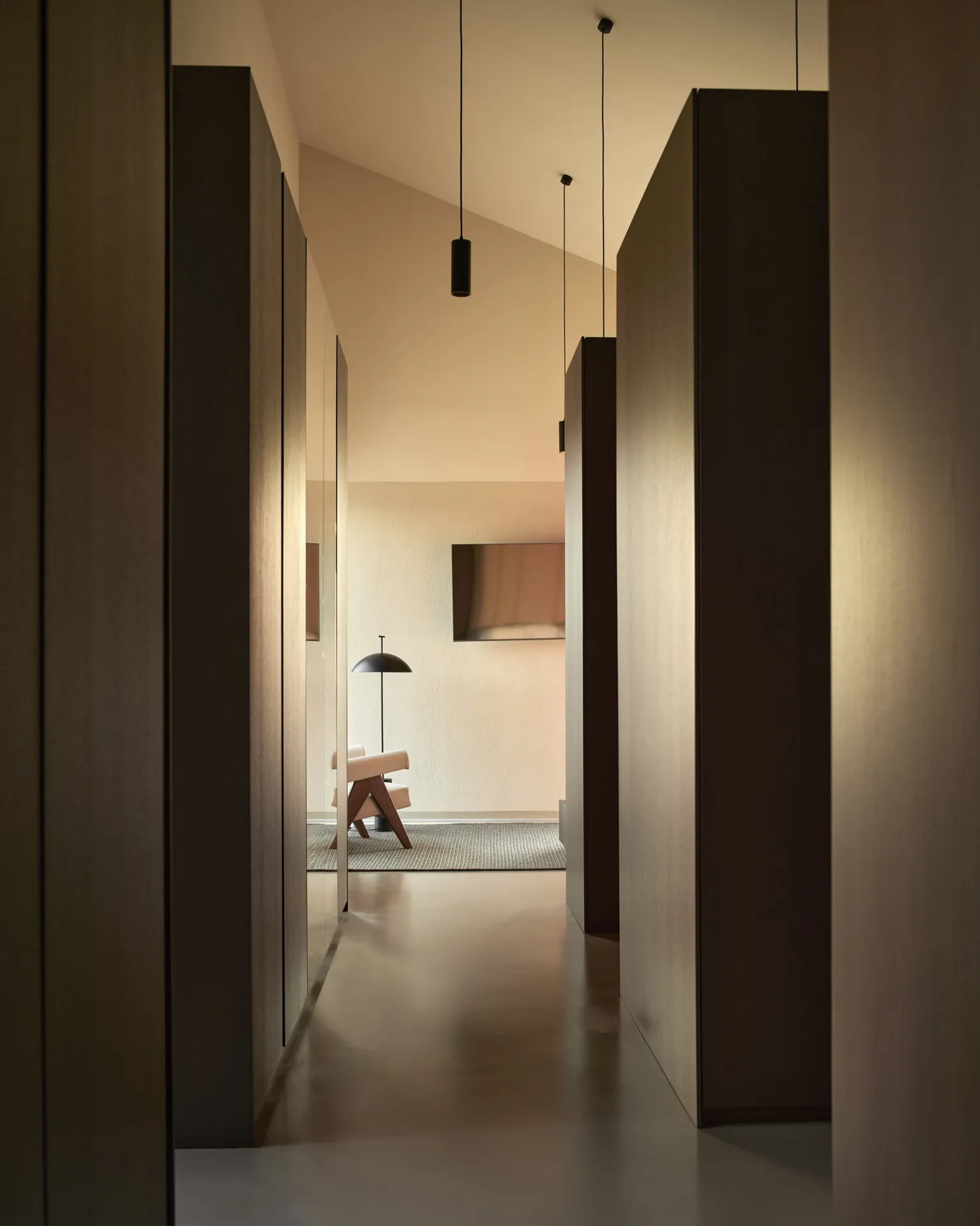
Wood plays a dominant role in the material palette. It is used for the exterior doors and window frames, as well as for much of the built-in furniture and interior detailing. This choice introduces warmth and tactility into the spaces, softening the mineral character of the stucco and tile surfaces. The result is an interior atmosphere that feels both rustic and contemporary, rooted in local tradition while clearly modern in expression.
Landscape and Setting
The house is integrated into the local landscape through a Valencian garden that extends outwards and blends into the surroundings. Open and expansive, the garden embraces and frames views over the town below, allowing the architecture to engage continuously with its setting. Rather than being conceived as a separate element, the landscape becomes an essential part of the spatial experience of the house.
The entrance patio, which welcomes visitors, is planted with a wide variety of citrus trees, offering shade, fragrance and a strong sense of place. Around the rest of the house, carob, cypress and hackberry trees contribute to a landscape that feels both cultivated and natural, reinforcing the project's connection to the character of the region.

Architect
Ramón Esteve
Project Team
María Martí
María Luna
Guillermo Sahuquillo
Adrián de Arriba
Building Engineer
Emilio Pérez
Visuals
Tudi Soriano
Pau Raigal
Landscaping
GM Paisajistas
Constructor
Llin Constructores
Photography
Mariela Apollonio
Eugeni Pons
Alfonso Calza
Filmmaking
Alfonso Calza
Music
PostData Sound Studio