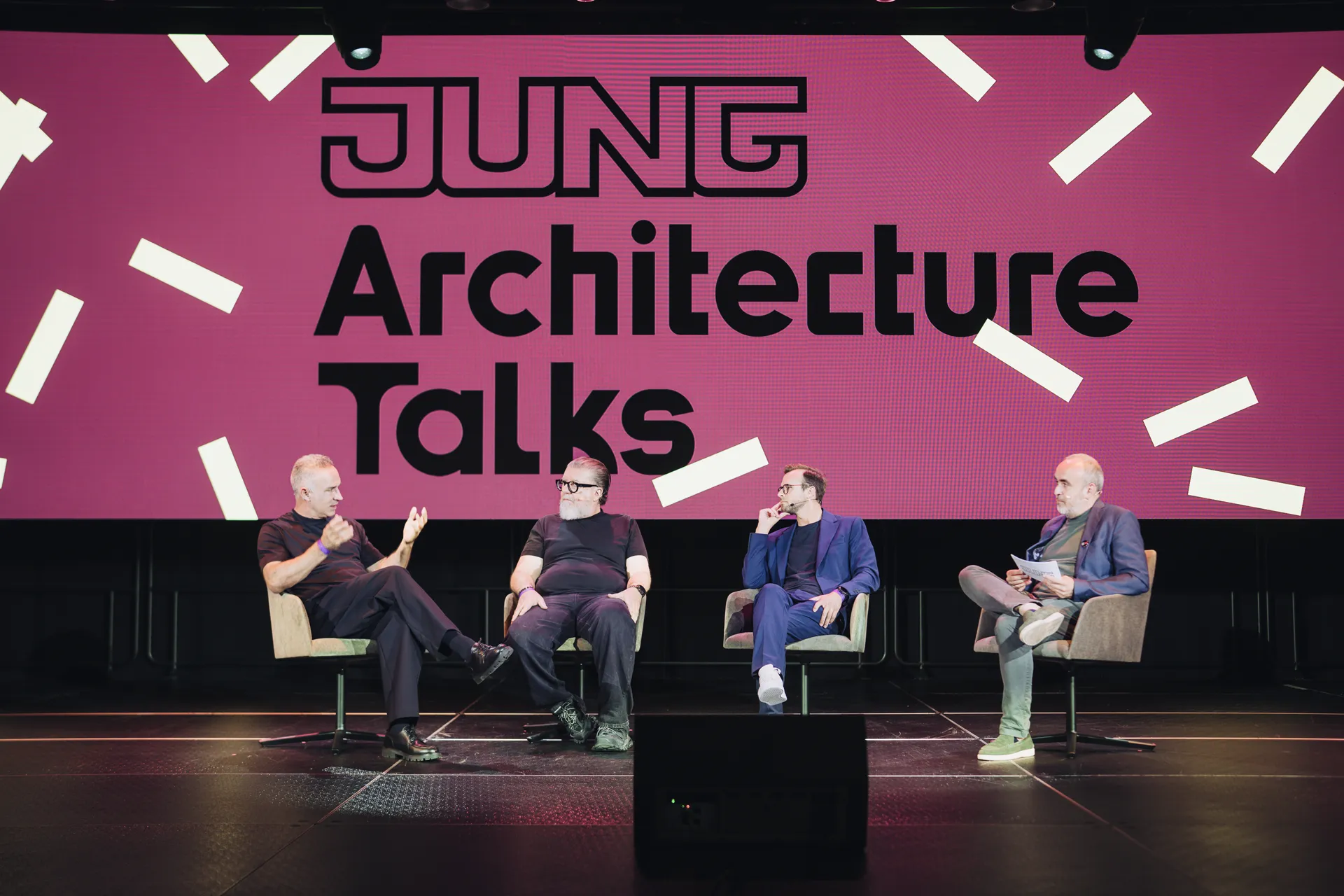
On Thursday, 4 June 2026, Roig Arena in Valencia hosted JUNG Architecture Talks for the first time. The international forum, which celebrates its 20th anniversary this year, brought together architects and cultural figures for an evening of dialogue, exchange and reflection on contemporary architecture.
Under the title Designing the Invisible – When technology becomes spatial quality,the event explored the elements that, although often unseen, deeply shape the architectural experience: technical integration, comfort, efficiency, atmosphere and the quality of space.
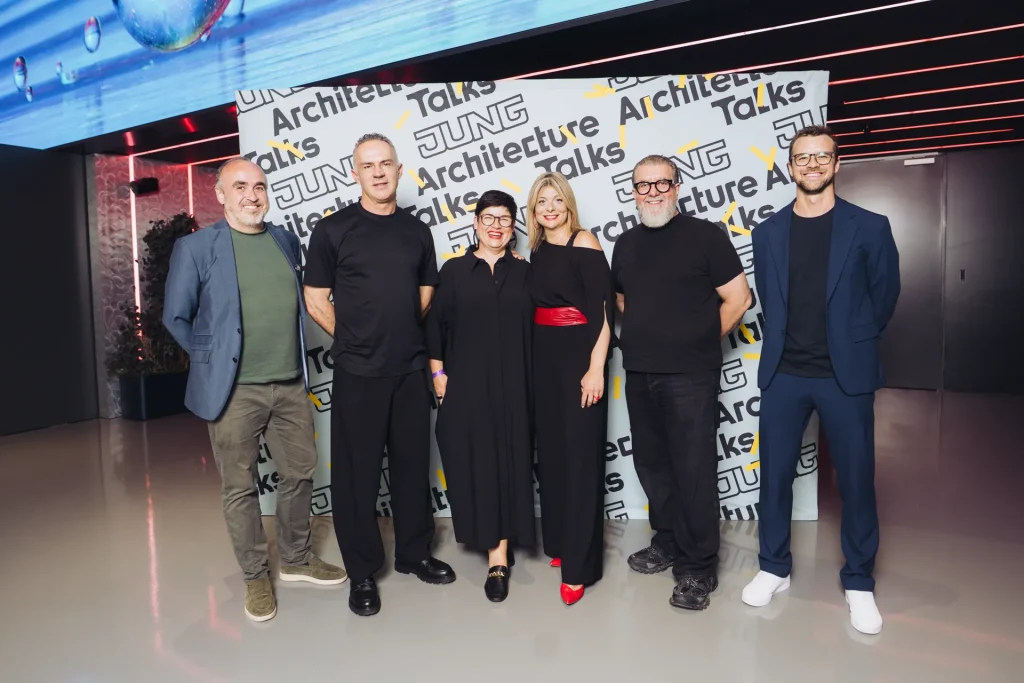
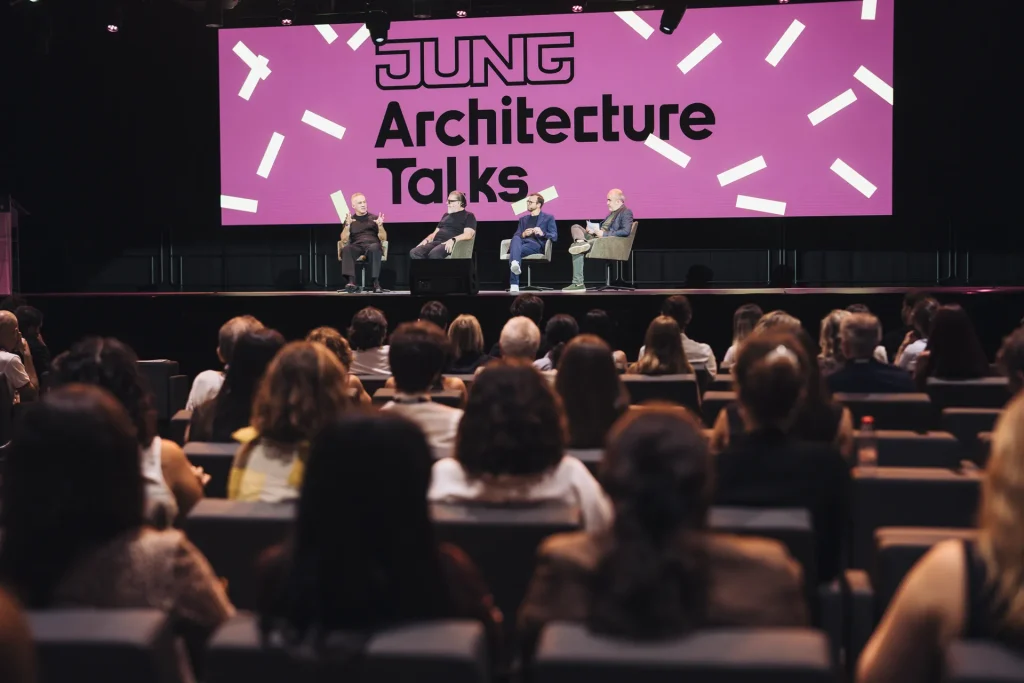
The programme featured architects from different backgrounds and contexts. Alongside Ramón Esteve, speakers included Mohammed Adib, Design Director at Dewan Architects + Engineers, and Juan Pedro Romera, from ERRE Arquitectura, in a session moderated by Ivan Blasi, Director of the EU Mies Award. The lectures were followed by a round table that opened up different perspectives on the relationship between technology and architecture, materiality and experience.
From architecture to the object: a cross-disciplinary perspective
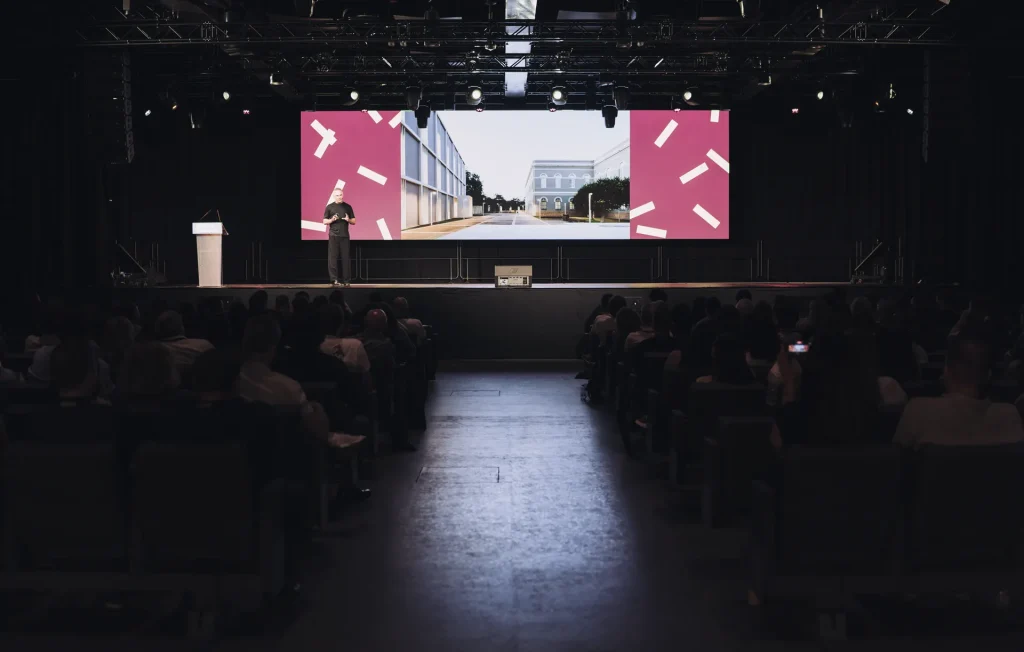
Ramón Esteve's talk presented the studio's work through a cross-disciplinary perspective, moving across the different scales that define its practice: architecture, interior design and product design.
This continuity between disciplines allows each project to be understood as part of a single creative process, in which technology is not conceived as an end in itself, but as a means of achieving greater precision, clarity and spatial coherence. From the scale of a home to the design of an object, the studio's work is guided by the same pursuit: to create spaces and pieces capable of generating balance, serenity and a natural relationship with their surroundings.
Contemporary systems make it possible to control light, structure, energy performance, construction processes and the connection between a building and its context with rigour. Technology provides accuracy, but its true value emerges when it is silently integrated, serving the atmosphere of a place and the experience of those who inhabit it.
Technology and craftsmanship
One of the central themes of the talk was the relationship between technology and craftsmanship, understood not as opposing forces but as complementary realities. The precision of current systems coexists with the accumulated intelligence of trades, natural materials and construction solutions rooted in place.
Technology makes it possible to simplify, remove the unnecessary and respond with greater precision to climate, energy efficiency, comfort and construction systems. It brings rigour and helps architecture settle naturally into its context, as though it had always belonged there.
Craftsmanship, in turn, introduces time, matter, memory and a human dimension. A stone wall, a handmade ceramic piece, carefully worked timber or a texture applied by an artisan ensure that a space is not only precise, but also close, tangible and alive. It is not a question of incorporating craft as decoration, but of integrating it into the material and construction logic of the project.
The value of the invisible
In contrast to technology understood as spectacle, the studio's architecture seeks to integrate technical complexity until it disappears. What matters is not to display the system, but to allow calm, comfort, proportion and beauty to emerge.
Within this balance between accuracy and matter, between innovation and reinterpreted tradition, lies an architecture capable of responding to landscape, climate and everyday life. True luxury is therefore not found in ostentation, but in the quality of space, in the serenity of the atmosphere and in the care with which every element has been conceived and constructed.
JUNG Architecture Talks Valencia 2026 offered a framework for reflecting on the role of technology in contemporary architecture and on its capacity to become a silent quality of space. An invisible yet essential dimension that transforms the way places are perceived, experienced and inhabited.